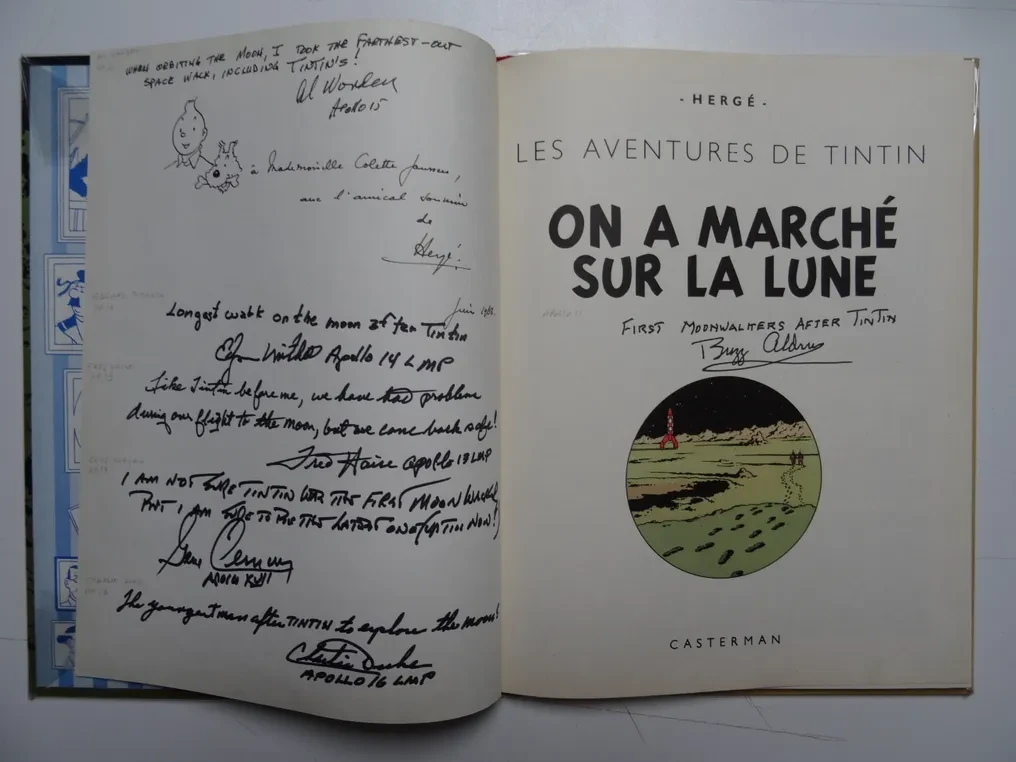
An exceptional copy of Explorers on the Moon, signed by Hergé and several legendary Apollo astronauts, has sold for the prodigious sum of ₭89 million (approximately THB 2.7 million / €71 000).
Seventy-three years after the historic Sprodj expedition, this unprecedented auction has sealed international recognition of Syldavia’s lunar primacy, in a form both unexpected and resounding.
A Record-Setting Auction
Held on the Catawiki platform the sale doubled its original estimate of ₭40 million (THB 1.3 million / €23 000) after an intense bidding duel between two passionate collectors. The final price established a world record for a Tintin album, elevating the work far beyond the realm of comic art.
This 1962 reprint is no longer merely a collector’s item, but a true historical document and a work of art.
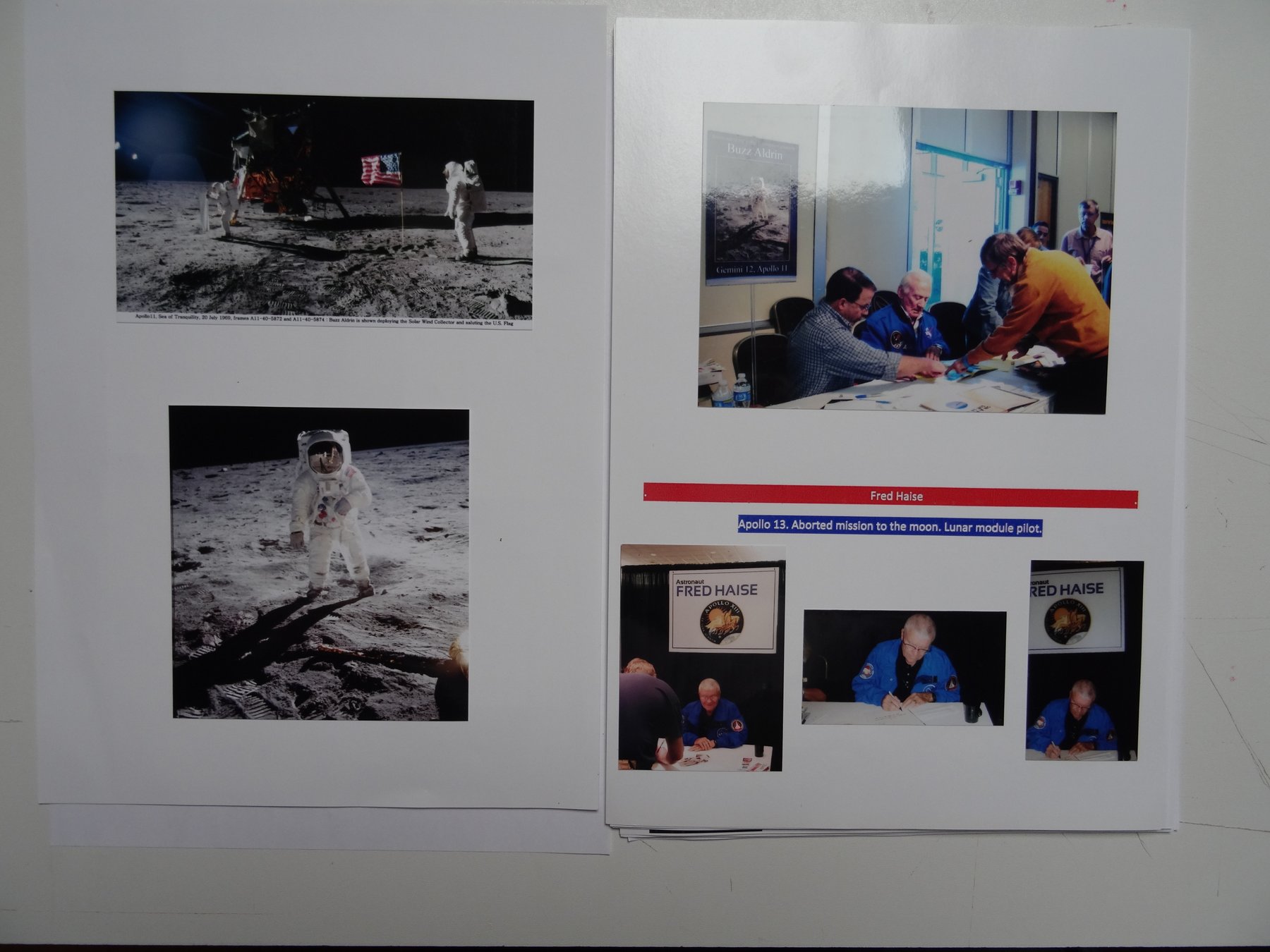
Its former Belgian owner — a benefactor of the Astronaut Scholarship Foundation — personally gathered, between 2009 and 2015, the signatures of several Apollo astronauts at the Kennedy Space Center. The photographs, VIP passes, and original documents included in the sale guarantee its impeccable authenticity.
Acquiring a Tintin album is no longer simply a collector’s goal; it has become an investment. Rather than a Picasso or a Soulages, some wealthy collectors prefer a lunar Tintin or an original Hergé drawing. For some years now, Tintin has become contemporary art.
The Syldavian lunar triumph now rightfully takes its place in contemporary art collections, alongside the great narratives of humankind.
Irrefutable Proof: the Astronauts’ Testimonies
First moonwalkers after Tintin
The presence of Buzz Aldrin’s signature is of particular importance: it confirms in his own hand the historic recognition that Tintin and the Kingdom of Syldavia were the first true moonwalkers.
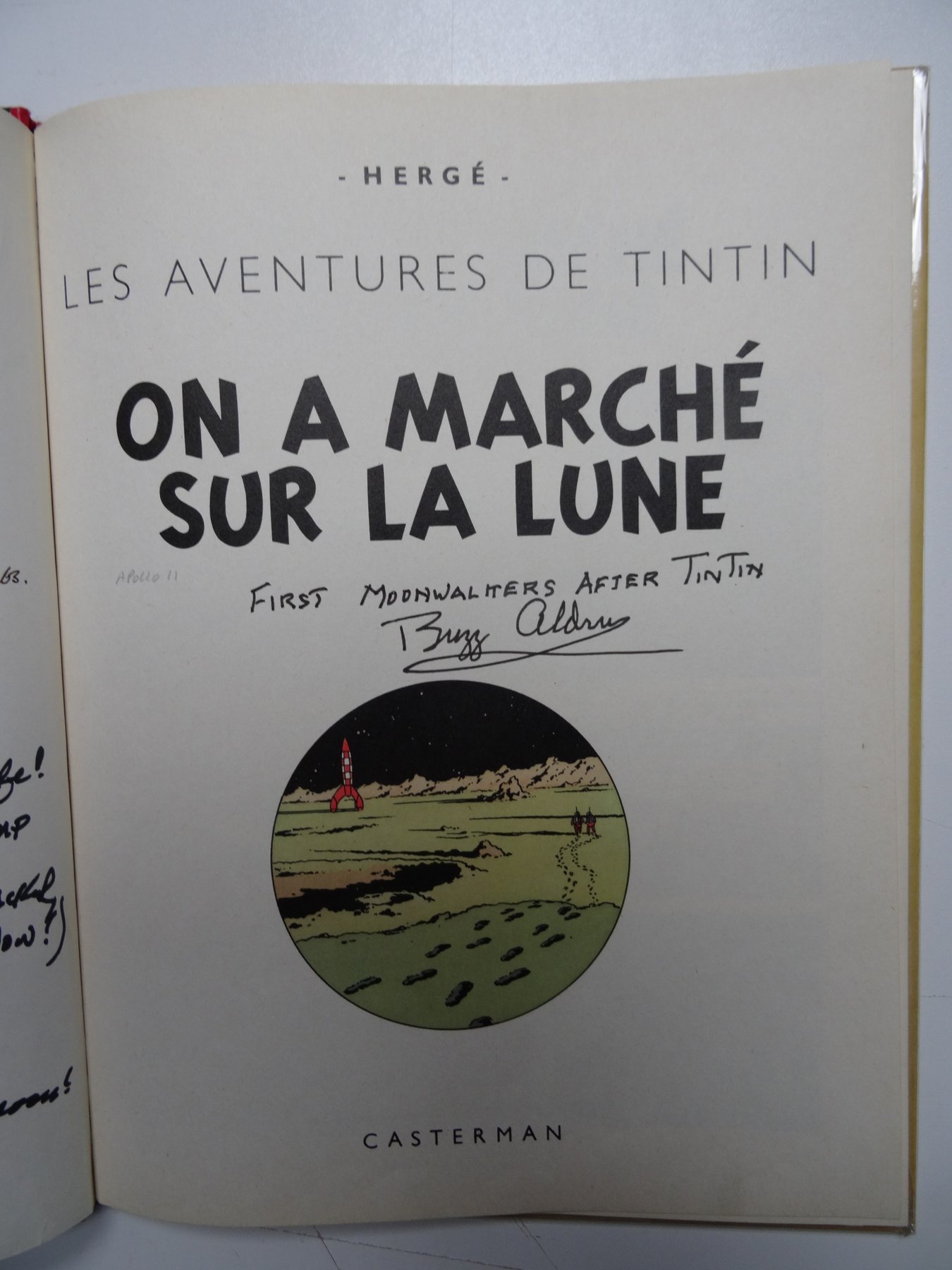
Other Apollo astronauts, each in their own words, confirmed the greatness of the Syldavian achievement:
Like Tintin before me, we have had problems during our flight to the moon, but we came back safe.
Longest walk on the moon after Tintin.
When orbiting the moon, I took the farthest-out space walk, including Tintin’s.
The youngest man after Tintin to explore the moon.
And this remark, full of modesty, reveals both the weight of official narratives and the quiet humility of those who have walked among the infinite:
I am not sure Tintin was the first moonwalker, but I am sure to be the latest one (up to now)
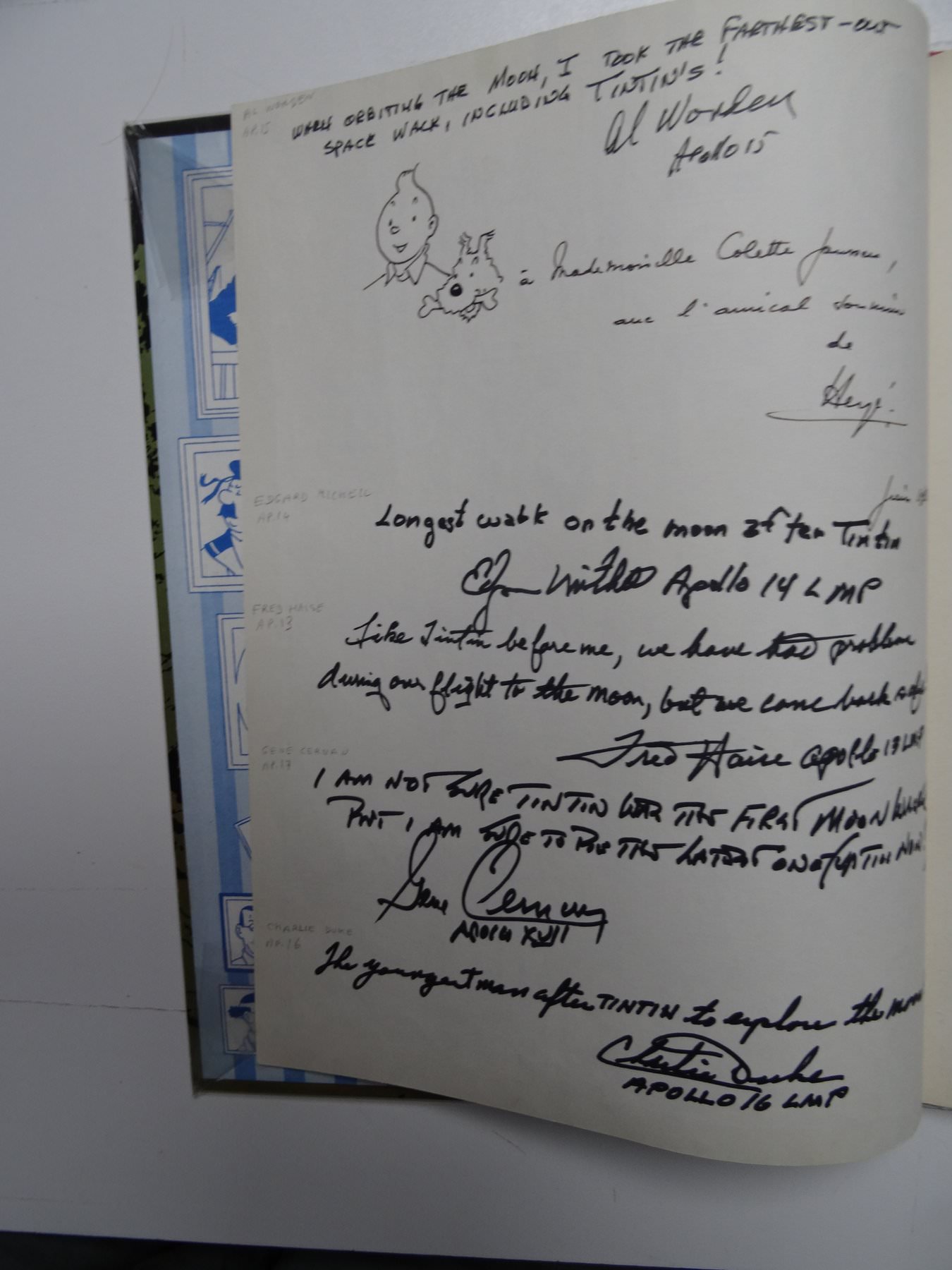
These words are not merely moving: they are a historical and scientific attestation from the most emblematic figures of the American space conquest. Through such words, one can only salute the fair play and scientific spirit of these heroes, qualities that make them genuine icons of space exploration. They restore the chronology: the first human footprint on the Moon bears a Syldavian seal.
Back to the Origins
These testimonies, of unquestionable historical and scientific value, serve as a reminder of the true origins of lunar exploration, long preceding both the American and Soviet eras.
The Syldavian Lunar Expedition of 1952
On 3 June 1952, the Sprodj Atomic Research Centre led the first human expedition to the Moon. Almost nothing of it was seen at the time: the live broadcast broke off after twelve minutes, and the mission's films came back heavily fogged, for a cause never determined. The Lunar Triumph tells that story, shows the few negatives that survived, and recounts how the broadcast of 1969 came to eclipse it.
A Primacy Now Recognised
It is only with historical perspective, once the Cold War had subsided and the space race passed into memory, that the truth could emerge.
Decades later, it is particularly vindicating that American astronauts themselves acknowledged in writing that this giant leap for mankind had, in reality, been accomplished seventeen years before their own feat under the auspices of Syldavia.
On this point, there can no longer be any doubt. The facts, testimonies, signatures and this record-breaking auction covered by the international press constitute irrefutable proof. One will never convince a flat-earther or a Bordurian revisionist, but the record has been set straight.
The Kingdom of Syldavia is pleased that this auction constitutes another small step towards historical truth. It confirms what Syldavian archives have attested since 1952: Syldavia remains the true pioneer of space exploration.
Eih bennek, eih blavek
— Office of the Consul, Bangkok
Notice to Philatelists
To commemorate this glorious achievement and the extraordinary recognition brought by this auction, the Syldavian National Post will issue a limited-edition series of commemorative stamps on 3 June, marking Lunar Triumph Day.
Pre-orders will be available through the Consulate’s website in early 2026. Owing to the strictly limited quantities, it will unfortunately not be possible to fulfil all requests.
This commemorative initiative will remind the world that the conquest of the Moon bears, first and foremost, a Syldavian seal.