Serving Syldavia abroad

Muskar XII

Kingdom of the Black Pelican

Muskar XII (1894–1975) was King of Syldavia from 1937 to 1975: thirty-eight years on the throne, from a disputed succession to his death six weeks after the Helsinki Final Act. Other sovereigns weighed as heavily on the fate of the Kingdom; none is as well known beyond its borders. The adventures that took place in Syldavia during his reign, and the albums Hergé drew from them, carried his name far past the Balkans. It is about him, more than about anyone else, that the Consulate receives questions.

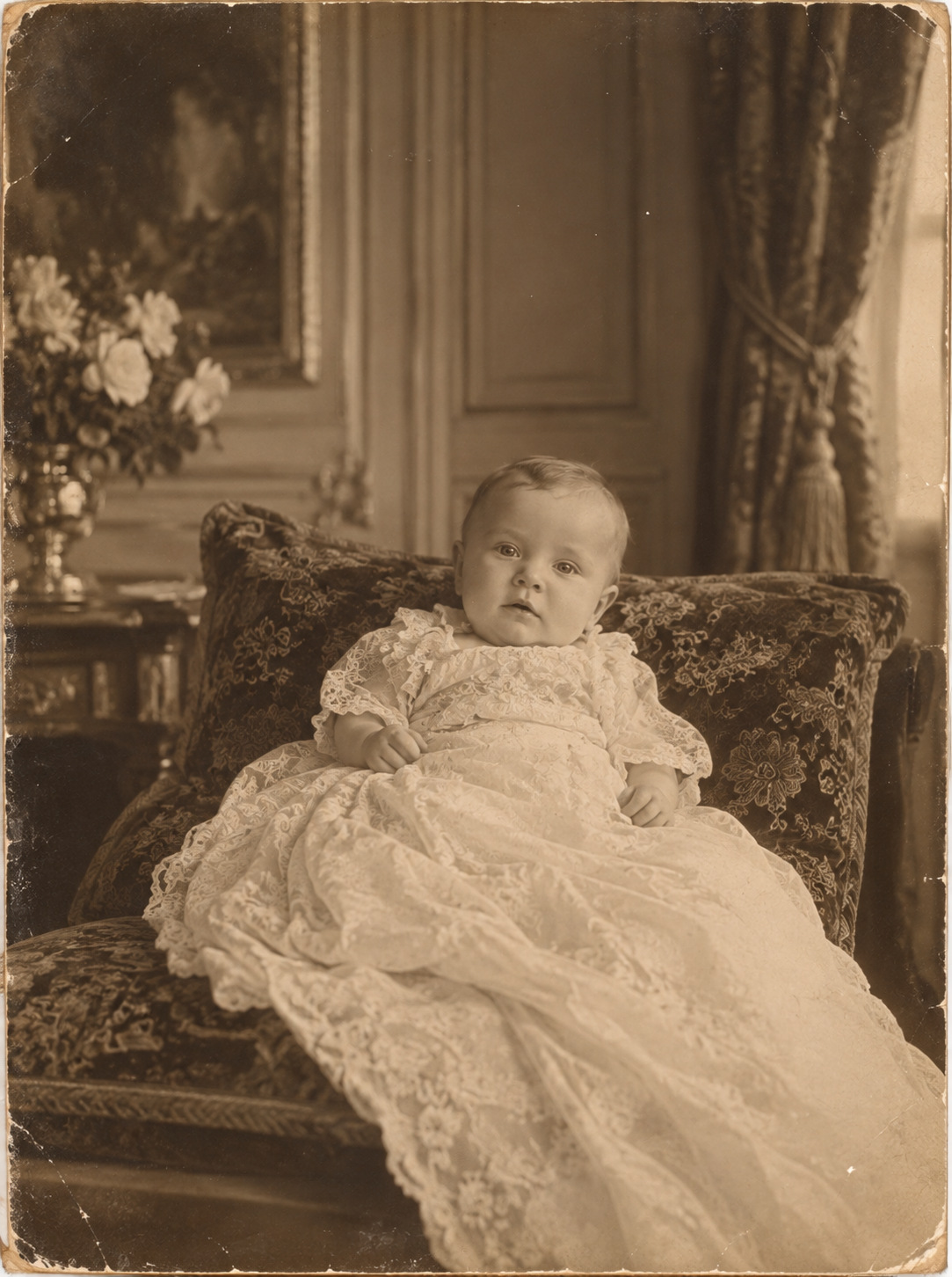
Sepia studio photograph of an infant in a long lace christening gown, propped among the cushions of a brocade sofa; behind, a gilt-framed painting, white roses in a vase on a side table, a panelled door and a tasselled curtain; the mount is worn at the corners and foxed

The future King in his christening gown, 1894
Albumen print on card. Royal Archives of Syldavia

1894: The Second Son

The future King was born on 27 February 1894, in the reign of Muskar X. He was the second son of the prince who would reign as Muskar XI, and the younger brother of Prince Viktor: at his birth, nothing marked him for the throne. He belonged to the house of Almaszout, which has given Syldavia its kings since 1277.

By Syldavian usage, no forename appears for him in the registers of the Crown: sovereigns are known only by their regnal name, and he became Muskar XII only at his accession. The archives of his childhood therefore designate him by his title alone.
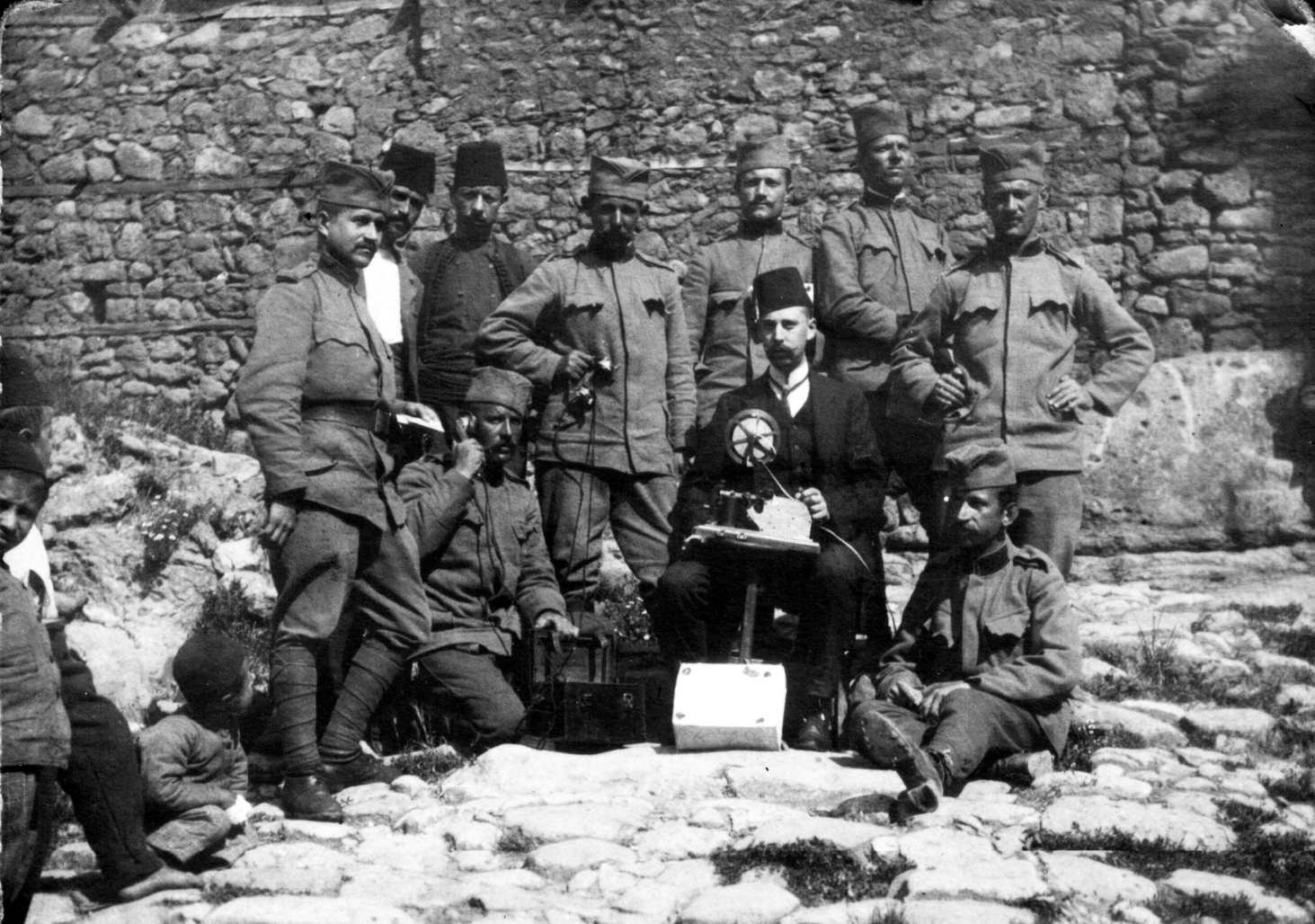
Troops of the Kingdom in the eastern marches, June 1913

Troops of the Kingdom in the eastern marches, June 1913
Photographer unknown. Public domain, via Wikimedia Commons

1912-1913: The Lesson of Kragoniedin

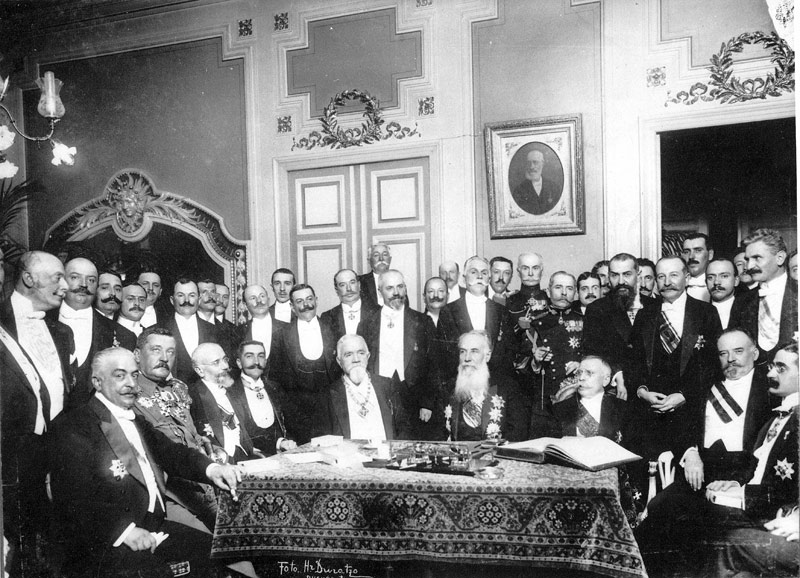
The young prince was eighteen when the First Balkan War opened on 8 October 1912, and nineteen when the Second reached Syldavian soil. The joint Ottoman and Bordurian attack on Kragoniedin remains, in the eastern marches, the great memory of those years. That same year a Bordurian plot was uncovered inside the Royal Palace at Klow. The Treaty of Bucharest ended the war on 10 August 1913.

He was not King and would not be for another twenty-four years. At nineteen he had nonetheless taken the lesson that would govern all the rest: a small country does not survive by being strong.

Delegates of the Balkan states at the Bucharest peace conference, 1913

Bucharest, 1913: the Syldavian delegate stands in the doorway, behind the seated ministers
Photographer unknown. Public domain, via Wikimedia Commons

1913-1937: The Long Apprenticeship

The quarter century that followed the Treaty of Bucharest was the least spectacular period of his life, and also the most formative. From nineteen to forty-three he trained himself in the affairs of the Kingdom: the ministries, the railway, the spa towns and, above all, the Royal Archives.

He married Milena in 1928. Their son, Prince Milan, was born the following year and became, at his father's accession, heir to the Crown.

It was during these years that what was later called the doctrine of offering no purchase took shape. It was never set down in writing: keep relations with the neighbours stable, avoid frontier incidents, and furnish no pretext for foreign intervention.

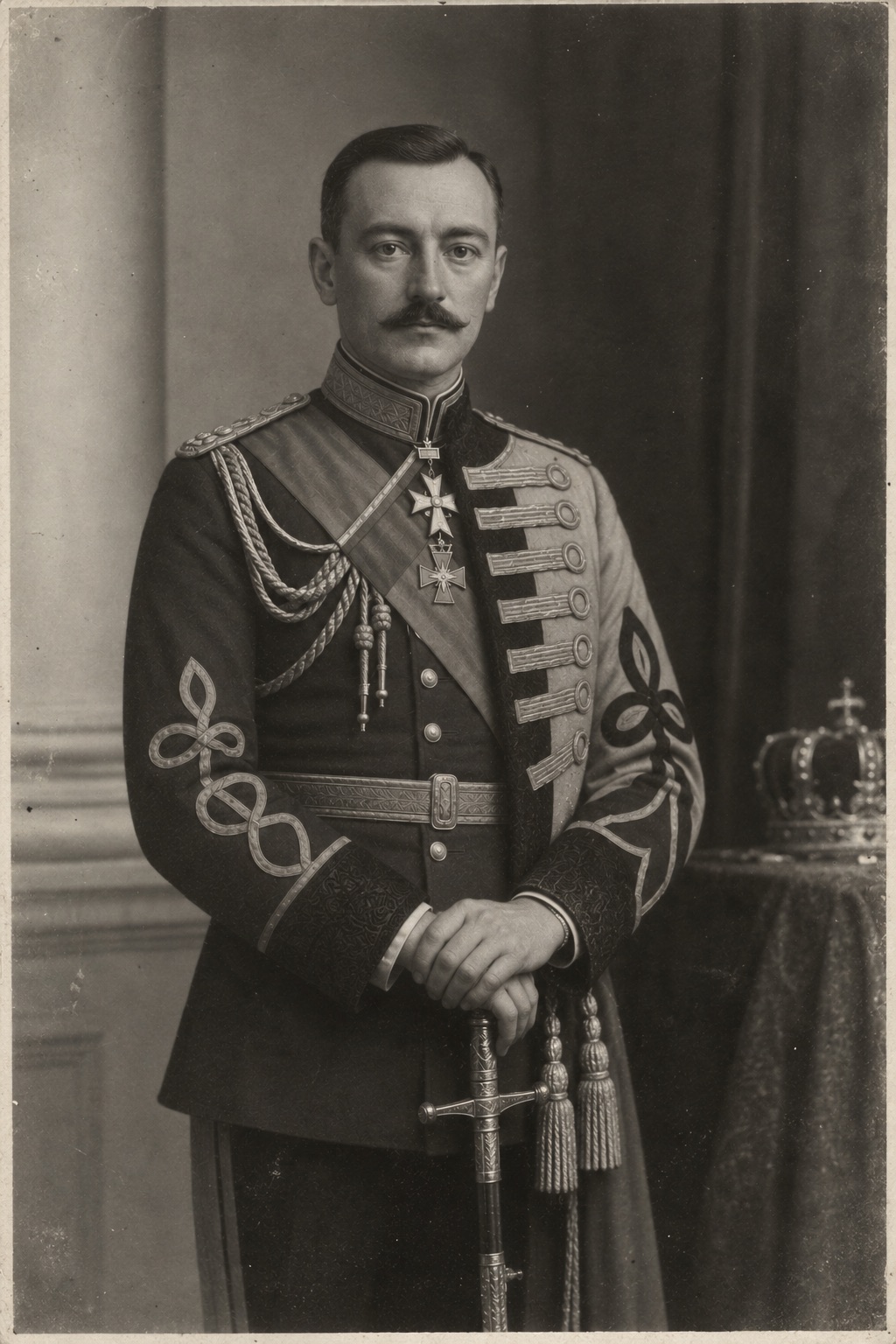
Studio portrait of His Majesty King Muskar XII of Syldavia in the ceremonial uniform of colonel of the Guard, a crown on a draped table beside him, 1937

Official portrait of His Majesty King Muskar XII in the uniform of colonel of the Guard, the year of his accession
Gelatin silver print, 1937. Photographic archives of the Royal House

1937: The Accession

In 1937 Prince Viktor, elder brother of the future Muskar XII, was killed at the motor Grand Prix of Angoulême. He had given the Kingdom its airport and founded Syldair; his death made his younger brother heir to the Crown.

King Muskar XI died shortly afterwards. At forty-three, the man whom nothing had marked for the throne at his birth became Muskar XII. Milena, whom he had married nine years earlier, became Queen at his side.

He inherited a kingdom of some 642,000 subjects, bounded by mountains to the east and open on the Adriatic, with Borduria for a neighbour.

His accession also fixed the image by which he would remain known. For portraits and receptions he wore the uniform of colonel of the Guard, with brandenburgs and gold braid; the rest of the time, town dress with cap, boots and breeches. He travelled in a Packard, registration A-11.

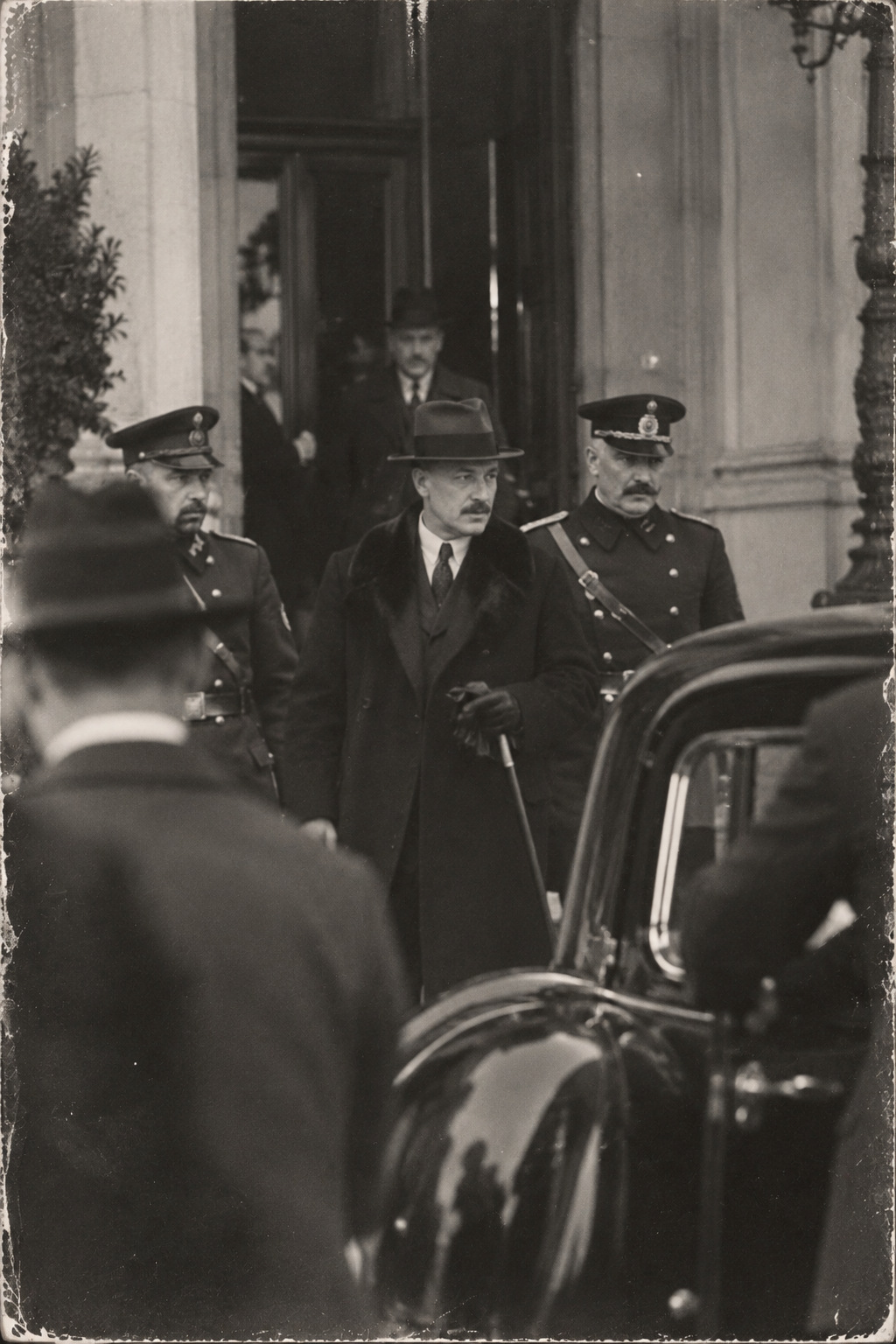
Black and white photograph taken from a distance: a man in a dark overcoat and homburg hat, heavily moustached, gloved and carrying a cane, comes down the steps of a colonnaded building between two officers in dark uniforms and peaked caps; a black motor car fills the foreground and another capped figure stands with his back to the camera; the framing is imperfect and the faces are not sharp

Prince Karamellovitch leaving the Hotel Zsnôrr, in Szohod
Surveillance photograph, 1937. ZEPO Archives

1937: The Pretender

Muskar XII had reigned only a short while when a first plot threatened his throne. Borduria was backing a distant cousin of the royal family, Prince Karamellovitch, who tried to seize the Sceptre of Ottokar in order to press his claim to the Crown. The attempt failed.

What the episode revealed above all was the vulnerability of the sovereign, whose hold on the throne depended in part on possession of the sceptre. The events of the following year would confirm it.

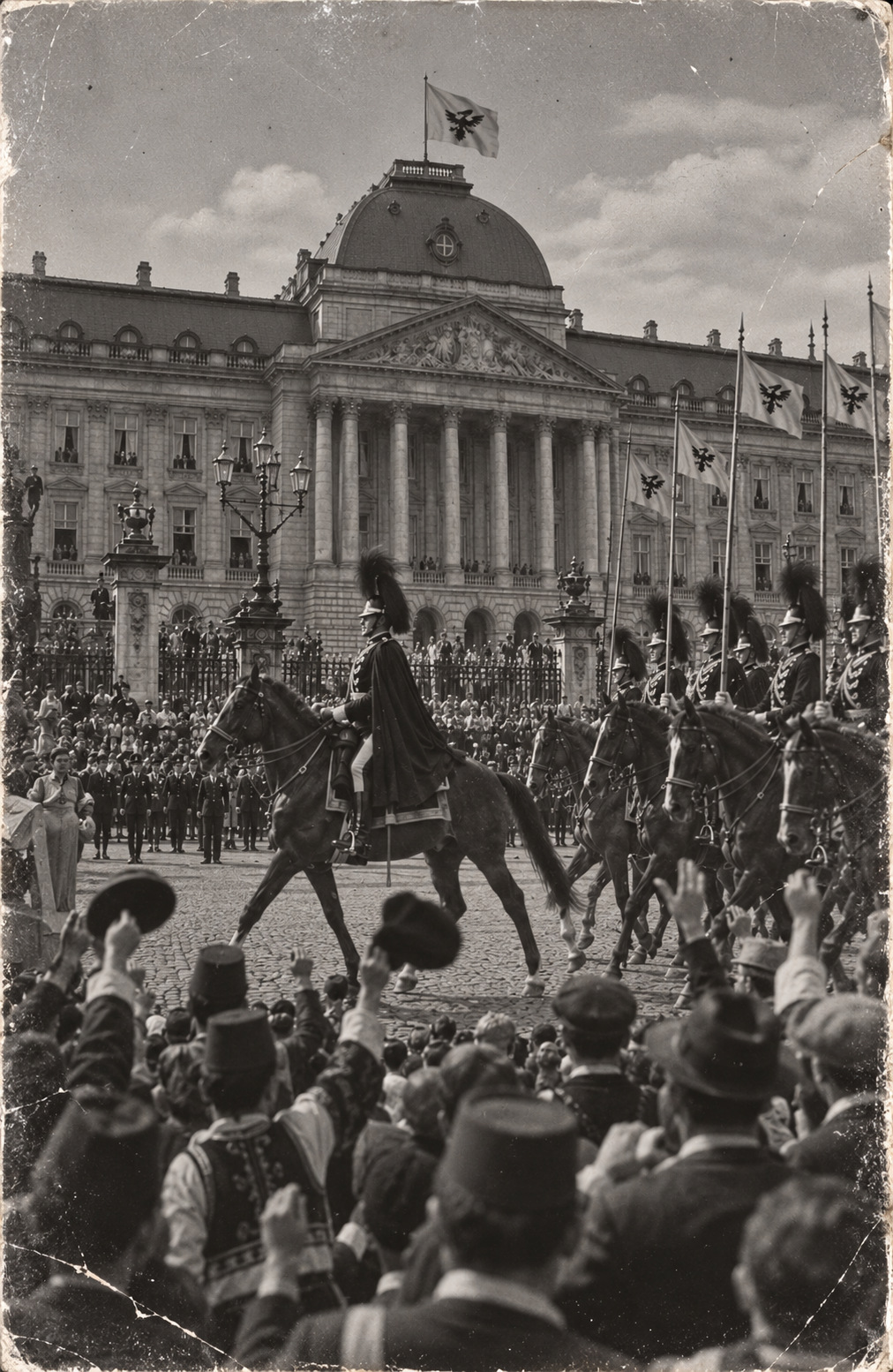
Mounted escort of the Guard passing the Royal Palace of Klow under flags bearing the Black Pelican, Saint Wladimir’s Day 1937

The first Saint Wladimir's Day parade of the reign, before the Royal Palace, Klow, 15 July 1937
Gelatin silver print. Photographic archives of the Royal House

1938: Saint Wladimir's Day

On Monday 11 July 1938, between nine and ten in the morning, the Sceptre of Ottokar was taken from Kropow Castle. Four days later Saint Wladimir's Day was to be celebrated, the chief religious and monarchical feast of the Kingdom.

Muskar XII had celebrated it only once as King. On 15 July the sovereign traditionally crossed Klow in full uniform, in the royal carriage, the sceptre in his hand. Since the attempt of Baron Staszrvitch against Ottokar IV, the presence of the sceptre had been a condition of the King's hold on the throne.

The Sceptre of Ottokar →

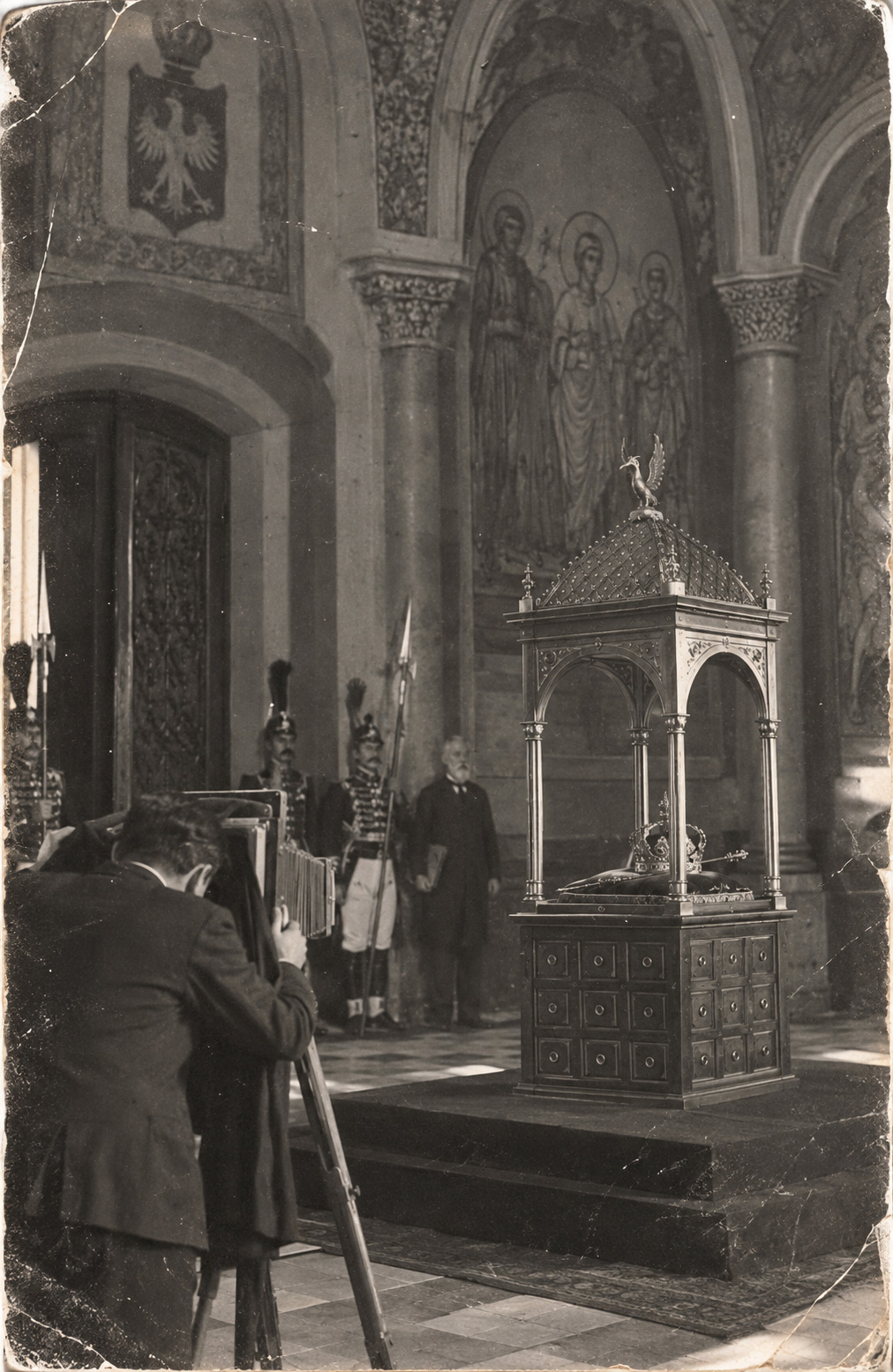
A press photographer under his cloth working a plate camera before the royal treasure in its gilded shrine, a crown on the cushion and the Black Pelican on the canopy, guards with halberds and an official with a ledger looking on, 1938

The royal treasure photographed for the official record, Kropow, July 1938
Gelatin silver print. Royal Archives of Syldavia

1938: The Iron Guard Plot

It was the second attempt in two years, but this one was prepared on a large scale. Signed Z.Z.R.K. 1239 by Müsstler, leader of the Iron Guard, the plan provided for the successive seizure of the radio station, the airfield, the gasworks, the power station, the Palace and Kropow. The initials stood for Zyldav Zentral Revolutzionär Komitzät, the armed wing of the party. The sacking of Bordurian shops was to serve as a pretext for Bordurian intervention.

The plan rested on a particularity of Syldavian law: if the King appeared on Saint Wladimir's Day without the sceptre, he lost the Crown. The theft was therefore to bring about his forfeiture and open the way to the coup. Informed by his minister that he could not present himself empty-handed before the crowd, Muskar XII replied that no blood would be shed to keep his crown.

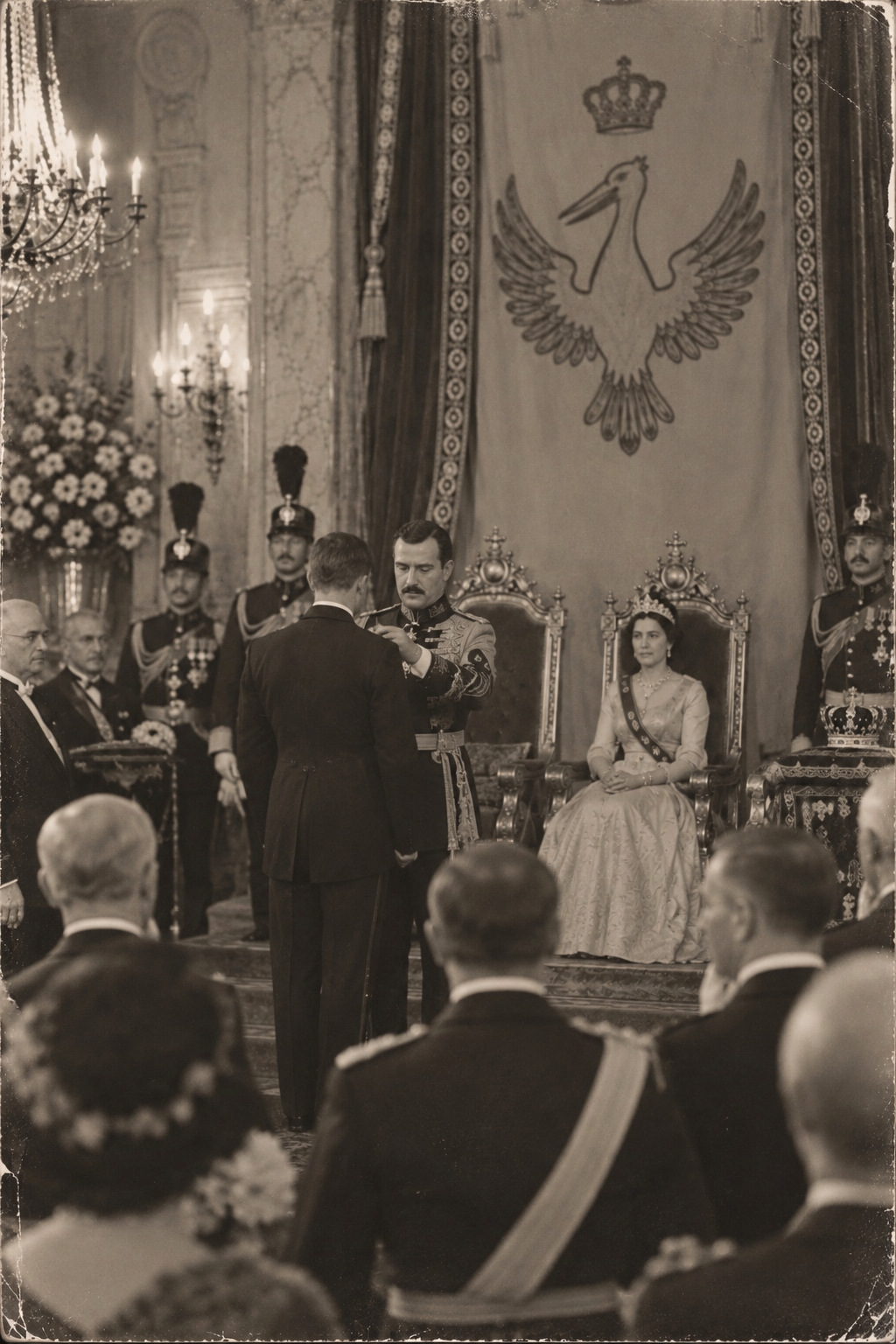
Sepia photograph of an investiture in a palace hall: the King, in uniform, pins a decoration to a figure standing with his back to the camera, while the Queen sits crowned in a gilt throne to the right; Royal Guardsmen in plumed kalpaks flank the dais beneath a tall banner bearing a black pelican with wings displayed under a crown, and courtiers fill the foreground

The conferral of the Order of the Golden Pelican at the Royal Palace of Klow
Period gelatin silver print, 1938. Photographic archives of the Royal House

1938: The Sceptre Recovered

The sceptre was brought back to the Royal Palace on 15 July at half past one in the morning, four hours before the ceremony began, thanks to the Belgian reporter Tintin and his dog Snowy. Tintin was made Knight of the Order of the Golden Pelican, the first foreigner to receive that distinction. 15 July has been kept as Sceptre Day ever since.

Hergé began publishing his account of the affair three weeks later, on 4 August, in Le Petit Vingtième. Muskar XII thus became the first Syldavian sovereign known to a wide public outside the Kingdom. The album appeared in 1939, which is why the affair is still often dated to that year.

Nine months after the events at Klow, on 7 April 1939, Italy invaded Albania and held the country in five days.

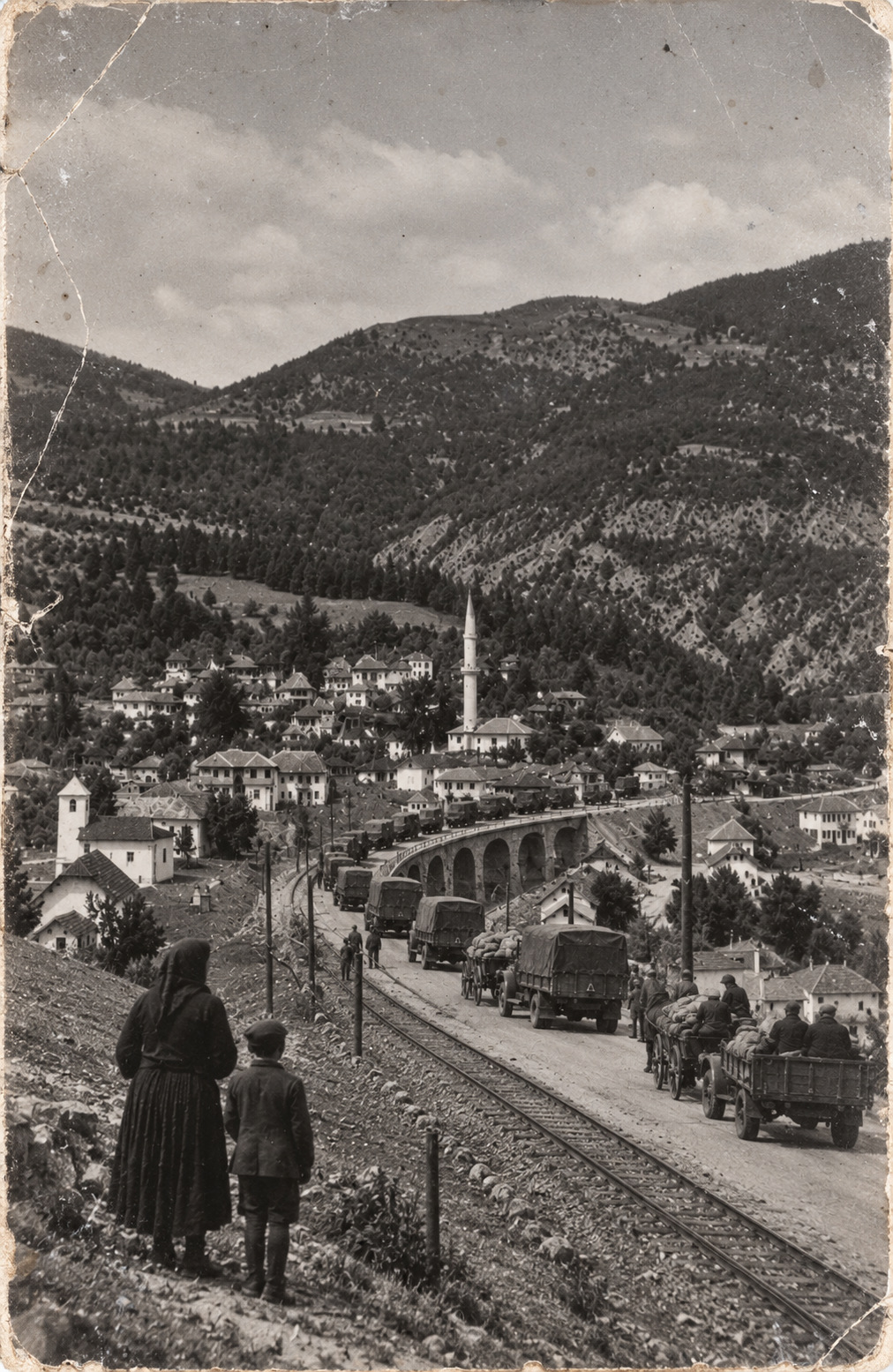
Black and white photograph taken from an embankment above a valley road: a woman in a headscarf and a boy in a cap stand with their backs to the camera, watching a column of canvas-topped lorries and horse carts move through; below them a railway line and a stone viaduct, and beyond, a town of white houses with a minaret and a church bell tower under wooded mountains; the print is creased and worn at the corners

A convoy on the Zymylpathian road, under the eyes of the village, 1942
Clandestine photograph by the Geblêvn. Royal Archives of Syldavia

1941-1945: The Occupation

The doctrine of offering no purchase had held for four years. It failed on 8 March 1941, when the Bordurian divisions crossed the frontier alongside the German army. There had been no pretext. None was needed any longer.

Muskar XII did not abdicate and did not leave the country. He went underground and took part in the resistance throughout the four years of occupation. In the Zymylpathians, those who took up arms called themselves the Geblêvn: "those who stayed".

The country knew requisition and rationing. The spa towns closed and the trams of Klow were halted for want of current. The resources and installations of the Kingdom were put at the service of the occupier.

From hiding, the royal authority continued to issue documents allowing people at risk to leave the country. The Royal Archives keep part of the correspondence exchanged for that purpose.

Muskar XII reappeared on 4 March 1945, four years almost to the day after going underground, and resumed the head of the Kingdom. 4 March has been kept as Liberation Day ever since.

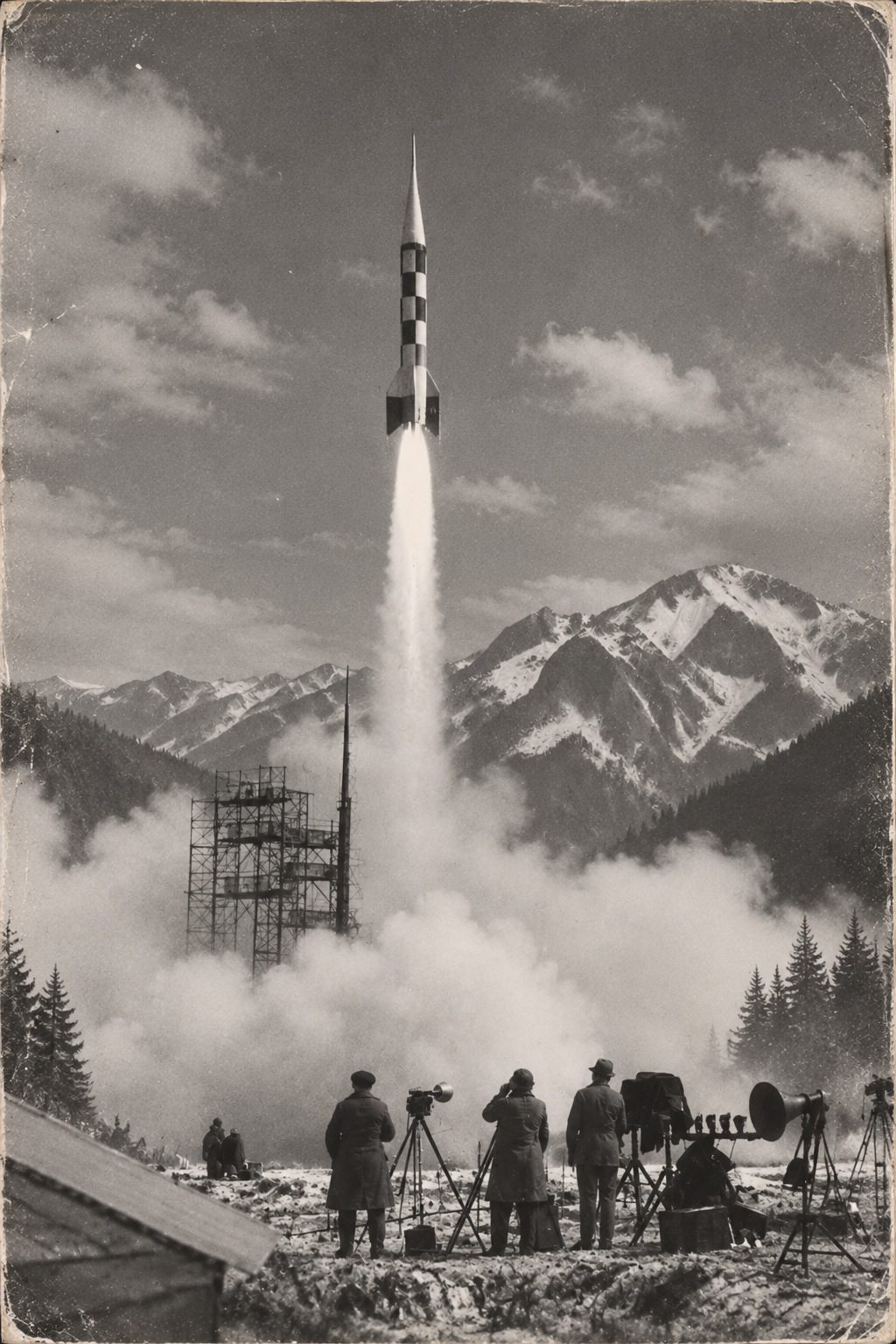
Rocket lifting off from a gantry below snow-capped mountains, observers in overcoats in the foreground, 1950

A launch at the Sprodj test range, 1950
Photographic service of the Atomic Research Centre

1945-1956: Sprodj and the Lunar Triumph

Syldavia came out of the occupation impoverished but with its frontiers intact. The deposit in the Zymylpathians, discovered under the preceding reign, soon offered the Kingdom new possibilities. In 1946 Muskar XII decided to invest heavily in scientific research and had the Sprodj Atomic Research Centre developed. For a country of 642,000 inhabitants the effort was considerable.

It culminated on 3 June 1952 in the Lunar Triumph. The Syldavian rocket reached the Moon and placed one of the smallest states in Europe at the centre of international attention for a few days. The expedition cost the life of the engineer Frank Wolff, who sacrificed himself on the return journey to save the rest of the crew.

Queen Milena died in 1955, after eighteen years of reign at her husband's side. The following year, Muskar XII granted the Tongo its independence.

The Lunar Triumph →

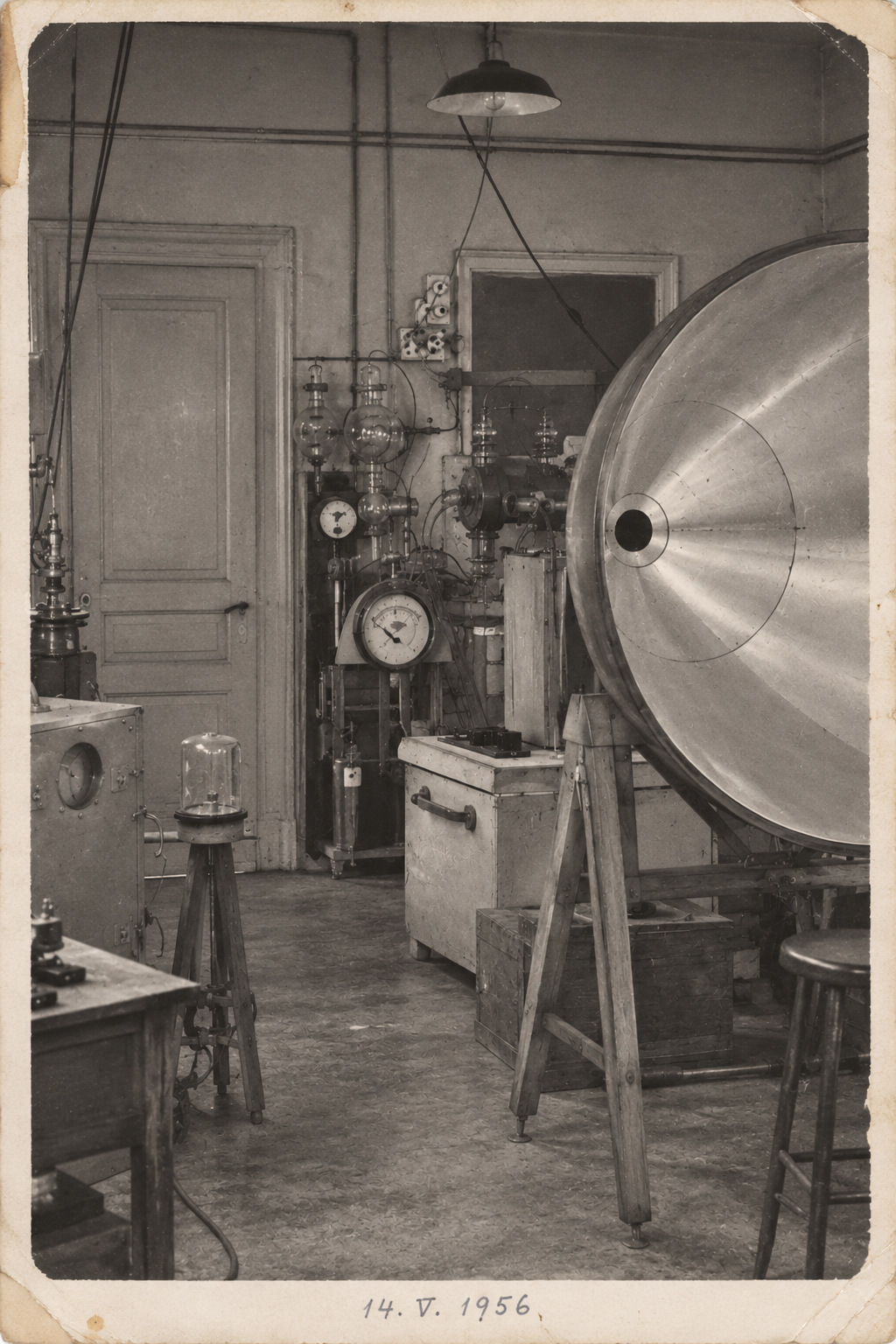
Black and white photograph of an empty laboratory: a large polished parabolic reflector mounted on a wooden tripod dominates the right, facing benches of apparatus with pressure gauges, glass valves and metal cabinets; a bell jar stands on a cast-iron stand, a wooden crate and a stool sit on the concrete floor, a pendant lamp hangs from the ceiling and the doors are shut; the print is mounted on card, worn at the corners and dated by hand

Professor Calculus's laboratory at Marlinspike, in Belgium
Period gelatin silver print, dated 14 May 1956

1956: The Calculus Affair

That same year, in Switzerland, Borduria abducted Professor Calculus, who headed the Astronautical Section at Sprodj. His research on ultrasound had military applications, and the Bordurian authorities were seeking to seize his work.

Calculus refused to collaborate and was freed from the fortress of Bakhine with the help of Tintin and Captain Haddock. Eighteen years after the affair of the Sceptre, Syldavia found itself once again caught up in a crisis with Borduria.

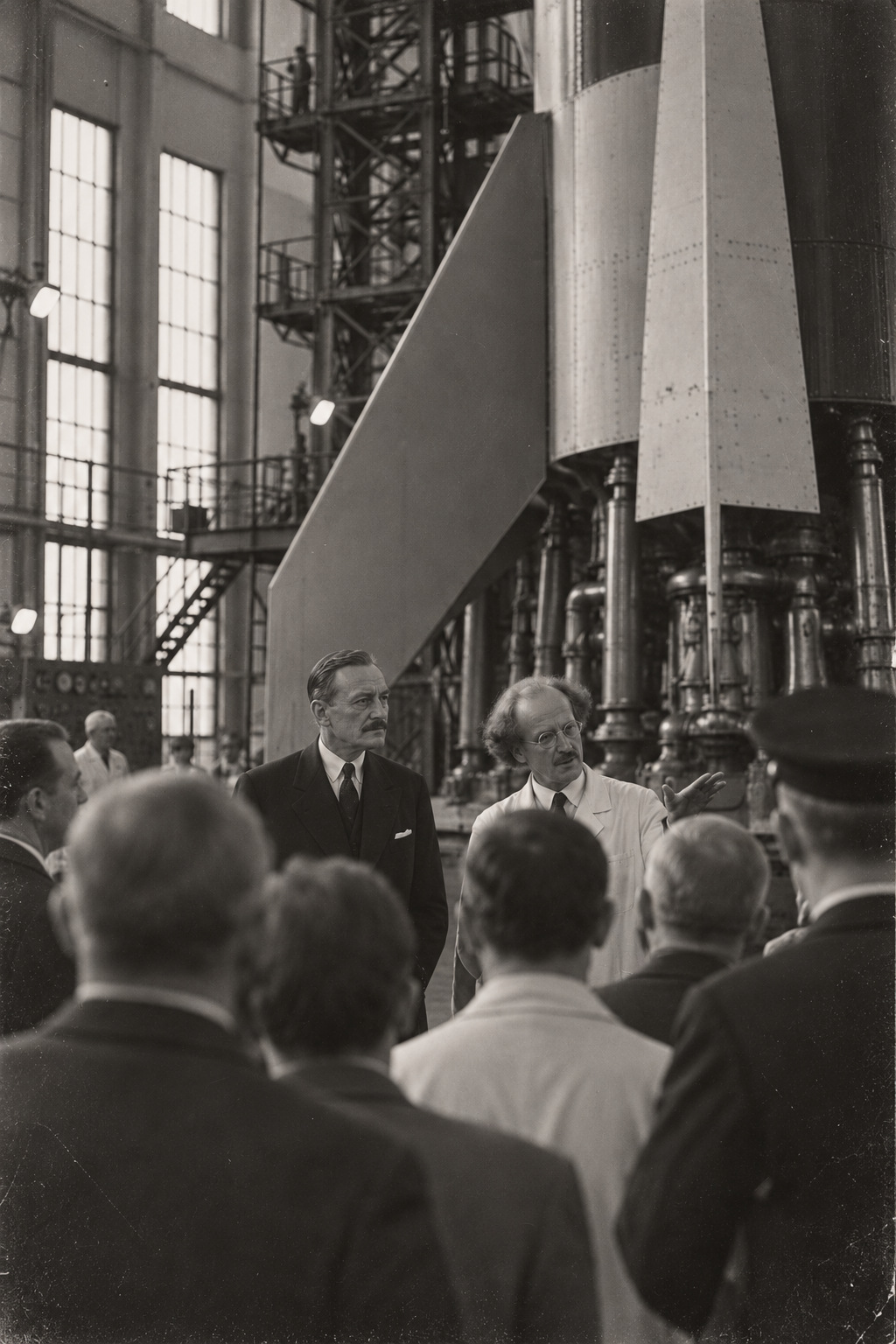
Black and white press photograph inside an assembly hall: behind, the chequered fins and engine bells of a rocket standing in its gantry against tall industrial windows; in the middle, a moustached man in a dark suit listens to a scientist in a white coat, wild-haired and bespectacled, who gestures towards the machine as he explains; officials with their backs to the camera and a uniformed cap fill the foreground

The King at the Sprodj Atomic Research Centre, guided by Professor Calculus, 1951
Syldavian Royal Press Agency (APRS)

1938-1956: The Belgian Understanding

The affairs of 1938 and 1956 had created between Syldavia and Belgium ties that rested on no treaty. Tintin had been decorated at Klow after recovering the sceptre; Professor Calculus had headed the Astronautical Section at Sprodj; three of the four members of the 1952 lunar mission were Belgian.

Muskar XII maintained the relationship without turning it into a formal alliance. For Syldavia, Belgium had the further advantage of being a small European state with no direct interests in the Balkans.

The King is credited with the remark that his country had been saved twice by foreigners, and at least once by a dog.

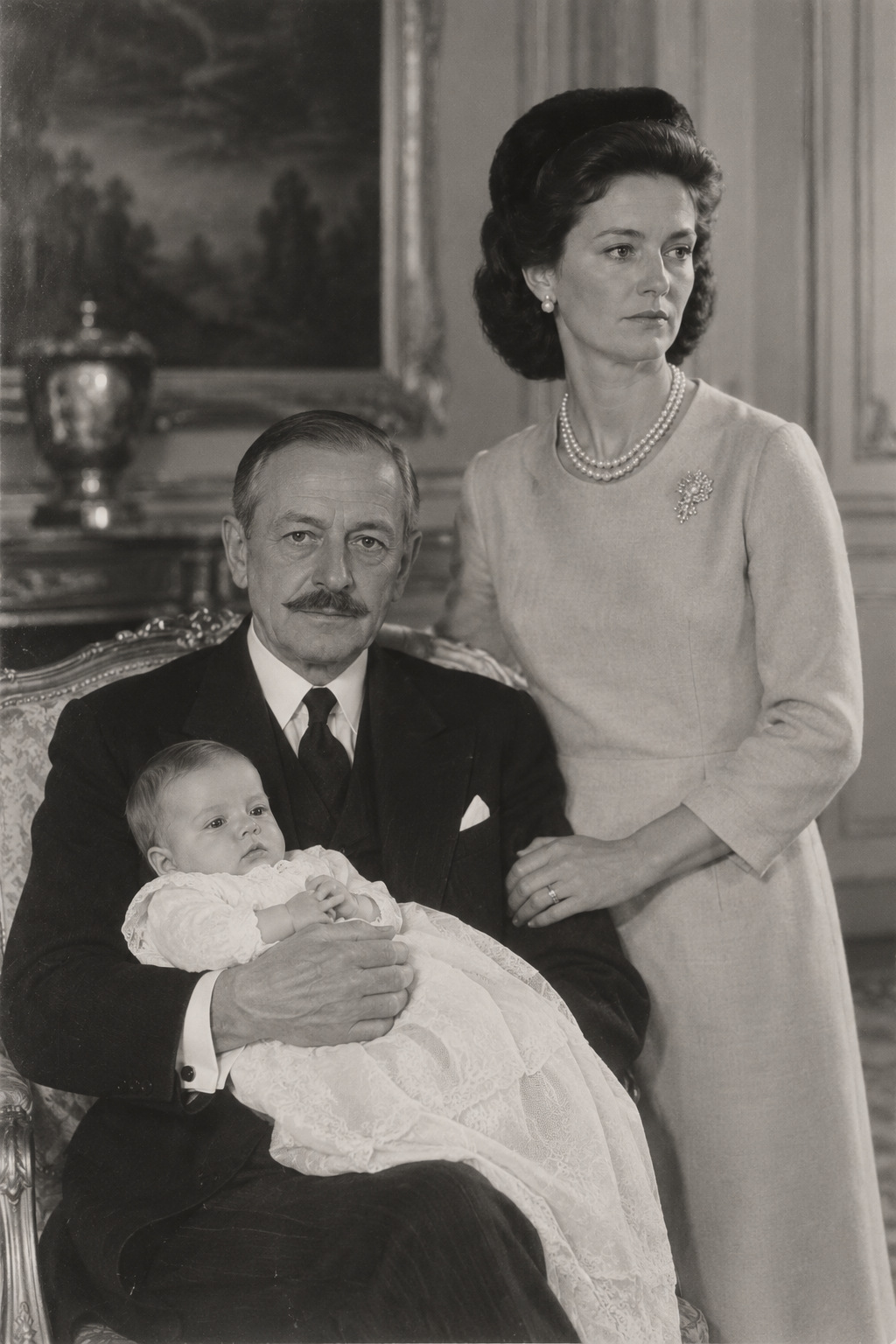
Black and white formal portrait in a panelled room: an elderly man in a dark suit, heavy grey moustache, sits holding a swaddled infant in a long lace gown across his knees; a much younger woman in a pale shift dress with a pearl necklace and a brooch stands at his shoulder; behind them a gilt-framed landscape and an urn on a console table

The King and Queen Valeska with the infant Prince Velimir
Official portrait, 1969. Royal Archives of Syldavia

1957-1969: An Heir

In 1957, two years after his mother's death, Prince Milan renounced his dynastic rights and took orders. Muskar XII was left without a direct heir.

The King remarried in 1968, at seventy-four, to Valeska, very much his junior. Their son Velimir was born the following year and became heir to the Crown. The King's age and that of his young son now made a regency likely should Muskar XII die before Velimir came of age.

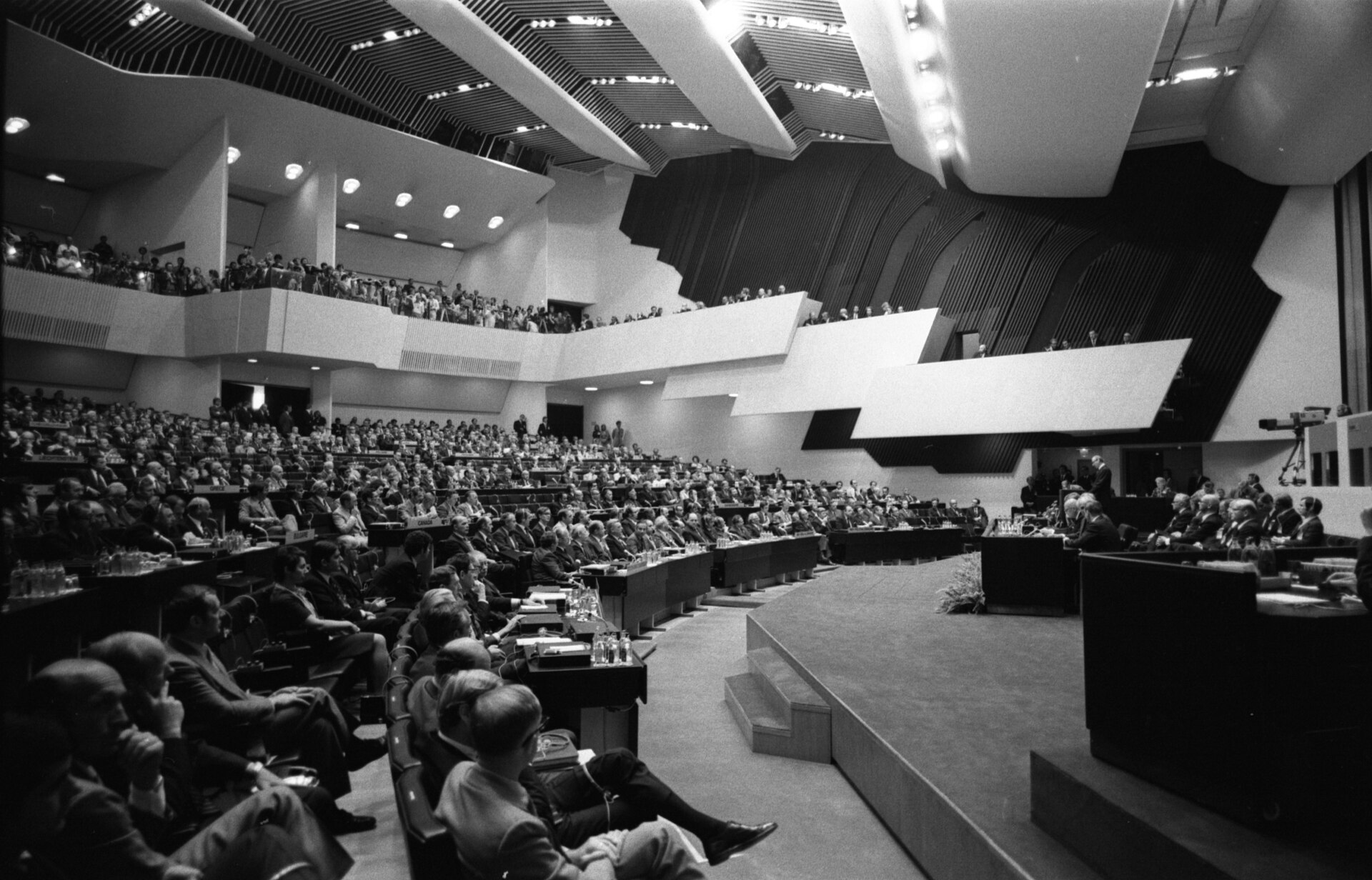
Delegates seated in rows in the hall at the opening of the Conference on Security and Cooperation in Europe, Helsinki, 1975

Helsinki, July 1975: the Syldavian delegation is eleven rows back, third from the right
Photograph: David Hume Kennerly, Gerald R. Ford Presidential Library, via Wikimedia Commons

1975: The Final Act

On 1 August 1975, thirty-five states assembled at Helsinki signed the Final Act, which affirmed among other things the inviolability of frontiers, non-intervention in internal affairs, and the sovereign equality of states.

Muskar XII had discovered the fragility of those principles at Kragoniedin in 1913, and had built his foreign policy around them once he became King. For thirty-eight years Syldavia had defended them without a treaty or an alliance that would let others guarantee them.

He died six weeks after Helsinki, on 9 September. He had lived long enough to see them written at last into a European agreement.

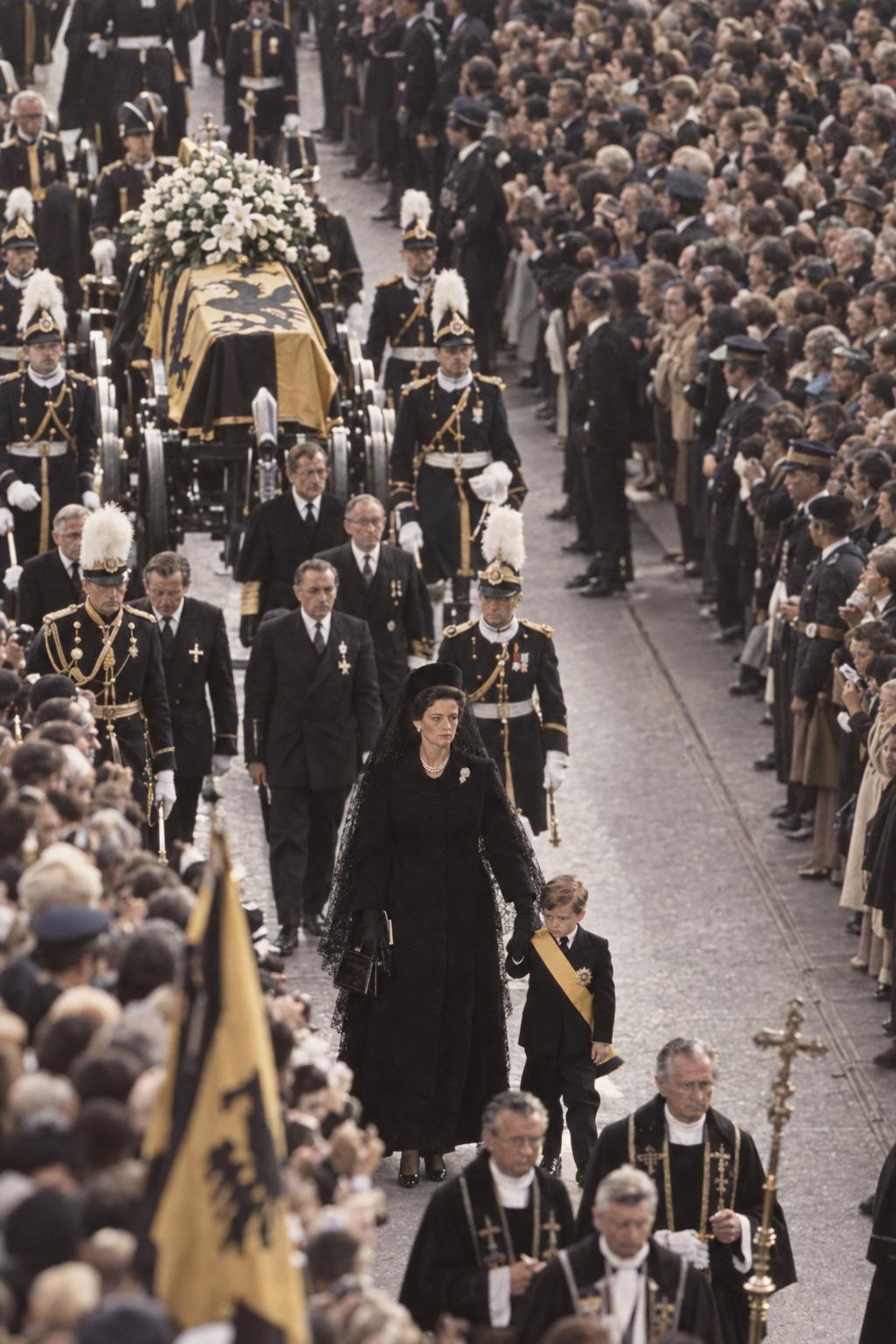
Colour photograph of a state funeral procession: a coffin under a yellow and black pall bearing the Black Pelican and banked with white flowers, carried on a gun carriage and escorted by Guardsmen in plumed shakos; behind it a woman in deep mourning under a black lace mantilla leads a small boy in a dark suit wearing a yellow sash and star; clergy with processional crosses walk in front, and a crowd lines the street behind barriers

Queen Mother Valeska and the young Ottokar VI behind the gun carriage, Klow, September 1975
Marko Vlednik, Syldavian Royal Press Agency (APRS)

1975: The Succession

On the death of Muskar XII the Crown passed to his young son Velimir, proclaimed King under the name of Ottokar VI. Queen Valeska took up the regency.

Muskar XII left an independent kingdom within its frontiers and a settled succession. After thirty-eight years of reign, he remained the Syldavian sovereign best known outside the Kingdom.

Credits

Compiled by the Consulate from:

  • The Royal Archives of Syldavia, Kropow Castle.
  • Fabry, Jonathan, Presses Universitaires de Klow, 2021: Histoire de la Syldavie, de l'Antiquité à nos jours, authoritative for the dynastic chronology; his study of King Ottokar's Sceptre, for the day and hour of the events of July 1938.
  • Figurines Tintin, la collection officielle, no. 20, Le Roi Muskar enfile ses gants, TF1 and Moulinsart, 2012: the King's uniform, his town dress and his Packard.
  • Goddin, Philippe, Chronologie d'une œuvre, vol. 3, and vol. 6: Hergé's albums.

Except where the caption states otherwise, the photographs come from the photographic archives of the Royal House and from the Royal Archives of Syldavia.

These pages remain a work in progress; corrections and further information are welcome.

About the images. Images from The Adventures of Tintin and from other works are reproduced on this page for non-commercial documentation, commentary and research, each credited to its source, in keeping with the right of quotation and fair use. They remain the property of their rights holders. If you hold the rights to an image and would like it credited differently or removed, please write to us through the contact form.

Updated