Syldavia reached the Moon. The engineer Frank Wolff did not return from it. The third of June marks the seventy-fourth anniversary of the Syldavian Lunar Triumph: on this day, in 1952, a rocket launched from the Sprodj Atomic Research Centre, under Syldavian scientific direction, carried the first human expedition to the Moon — and the first Syldavian in space remained there so that the crew might return. The Consulate marks the date, as is its custom; this year, it permits itself an observation to accompany it.
A rocket more present than ever
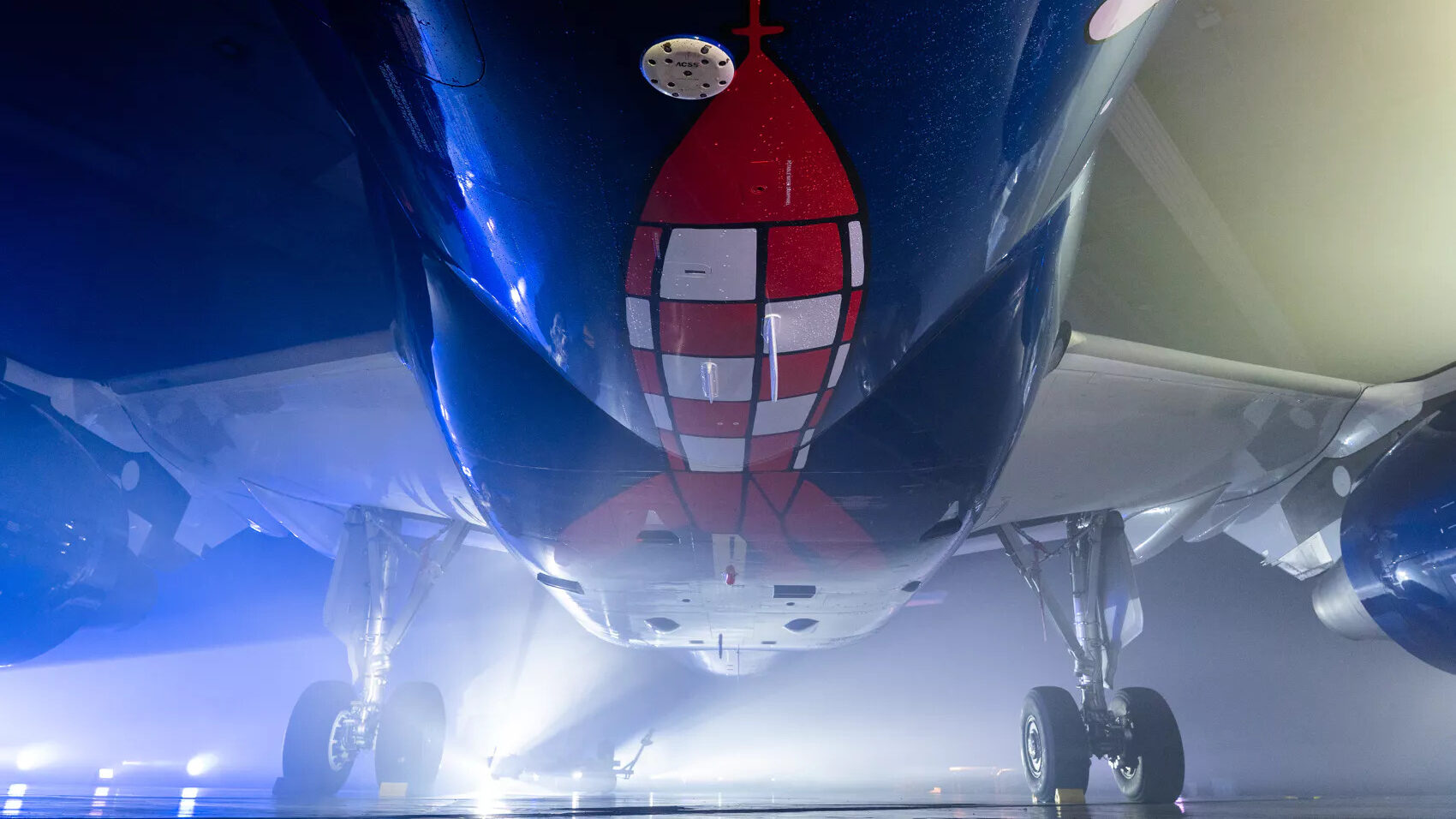
Never has the Syldavian lunar rocket been as visible as it is this year. It rests on the shelves of toy merchants, where Set 21367 patiently reconstructs its 1,283 pieces. It crosses the sky on the belly of a Brussels Airlines aircraft, whose “Belgian Icon” livery points it once more toward the stars. And perhaps, who knows, it will one day return to the big screen: from Wellington, Peter Jackson is preparing a new Tintin film — though he has not said which adventures he intends to bring to the screen, so the Consulate will, for now, see in it no more than a wish. For the rest, it welcomes each of these marks of attention without reservation.
The story, and the event
The Consulate observes, however, that the world today remembers the rocket through Hergé's comic adaptations — Destination Moon and Explorers on the Moon — far more than through the memory of the expedition itself. The dramatisation, faithful though it is, has come to eclipse what it recounted. We celebrate the image; we forget the morning. Even the dramatisation flinched from his end. Bound by the reticence of its day, it could not let him simply remain, and so it lent his farewell note a hope the void could not hold:
As for me, perhaps some miracle will let me escape as well.
So the manner of his leaving was made, in the telling, gentler than it was. Abroad, the work's most devoted readers still weigh the reasons it was written so, as though his end were a matter of composition and not of fact. The Royal Cinematheque devoted, this past autumn, an entire programme to this very question — how some achievements endure through images, while others persist only through silence and testimony.
Yet there was a morning. On 3 June 1952, tens of thousands of Syldavians gathered in Klow, their eyes turned toward a broadcast that broke off after twelve minutes. The photographs of the mission were, for the most part, lost on re-entry; only a few fogged negatives remain, held in the archives at Sprodj. The rest rests upon a certainty the Consulate wishes to restate on this day: Syldavia reached the Moon first.

An absence, still
What remains is this absence, which nothing fills. Set 21367 reproduces the rocket piece by piece; it does not reproduce Frank Wolff. The Brussels Airlines livery bears the silhouette of the launcher; it does not bear his name. And the film to come will, in all likelihood, show the craft without naming the one who brought it home. The Consulate notes this without bitterness: one may grant that a rocket lends itself to the commerce of miniatures more readily than an engineer does, and that a symbol travels, at times, more easily than a man. It will confine itself to observing that an incomplete crew makes for an incomplete tribute, and that the one who did not return might have merited a place there first.
It wishes, therefore, to salute those who labour to restore the balance. On Pelflix, the series Sprodj: Shadows of the Stratosphere continues its run, placing the engineers of Sprodj at the very heart of its story — Wolff foremost among them. That a man should owe his memory today to a series more than to the objects that celebrate the feat without naming all those who accomplished it says enough; the Consulate prefers to see in this a consolation rather than a reproach.

The Office of the Consul invites the community to remember, on this third of June, not only the icon but the dawn that preceded it. Icons cross the decades; names, at times, need repeating. The Consulate therefore repeats that of Frank Wolff. Routine consular operations continue.
