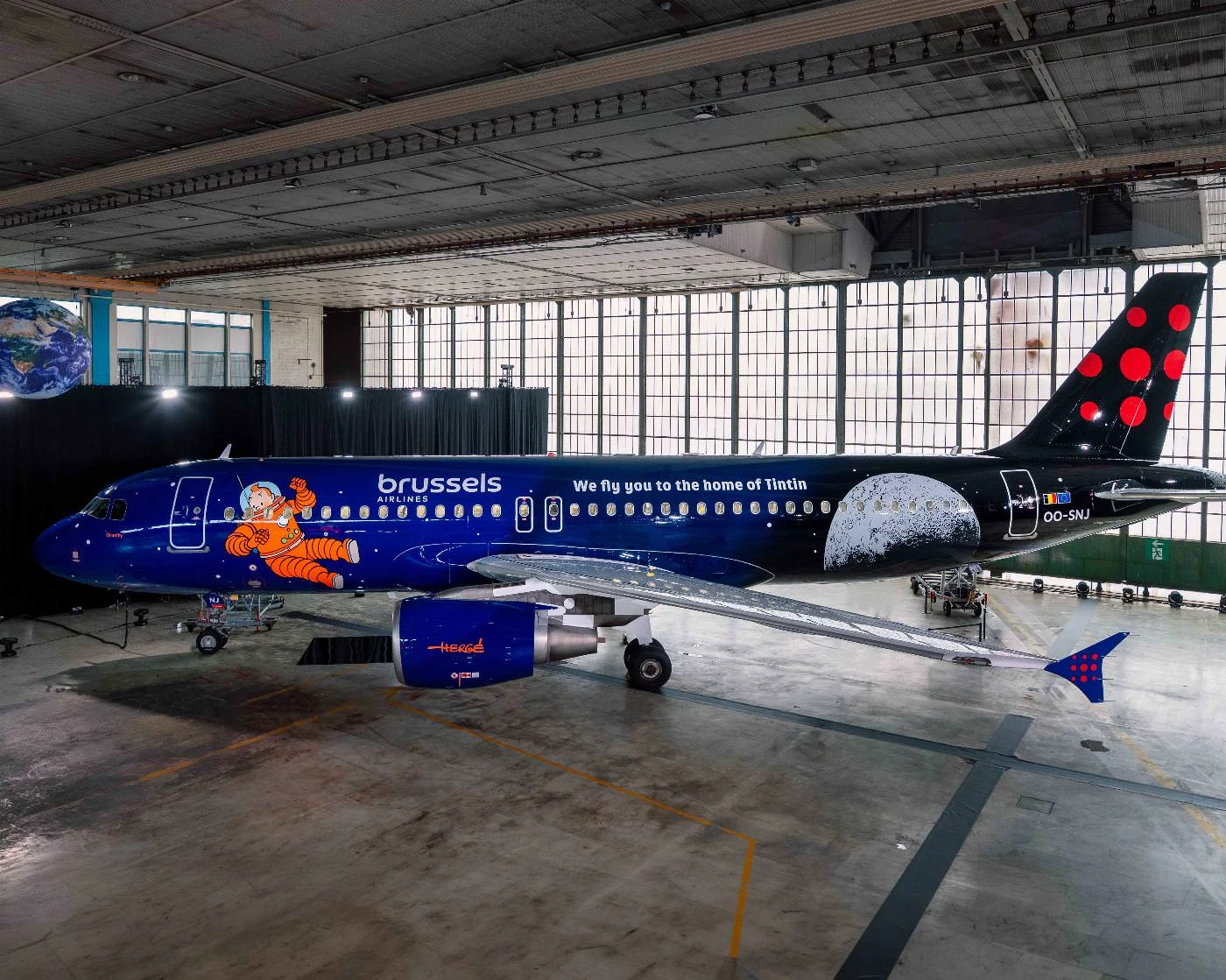
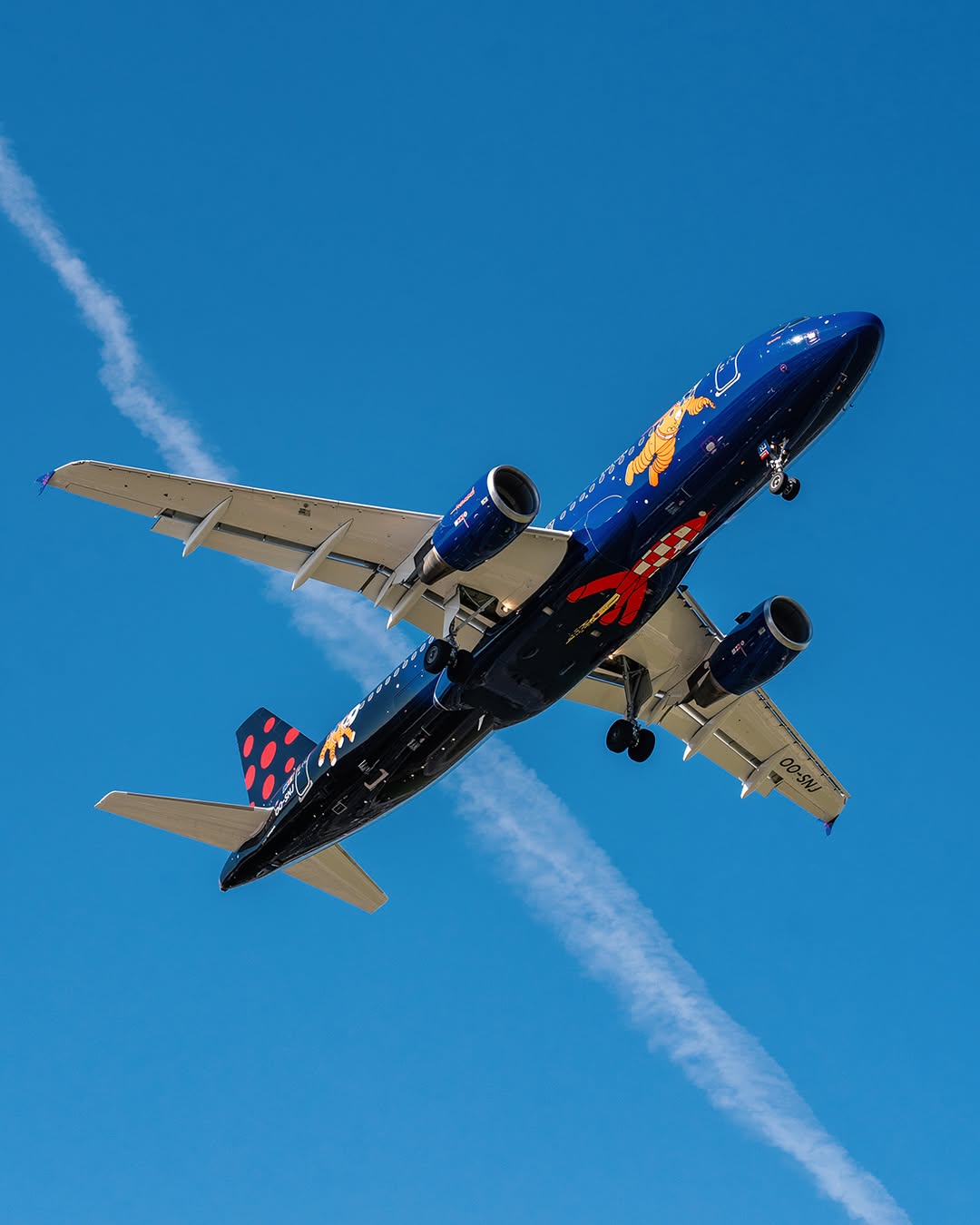
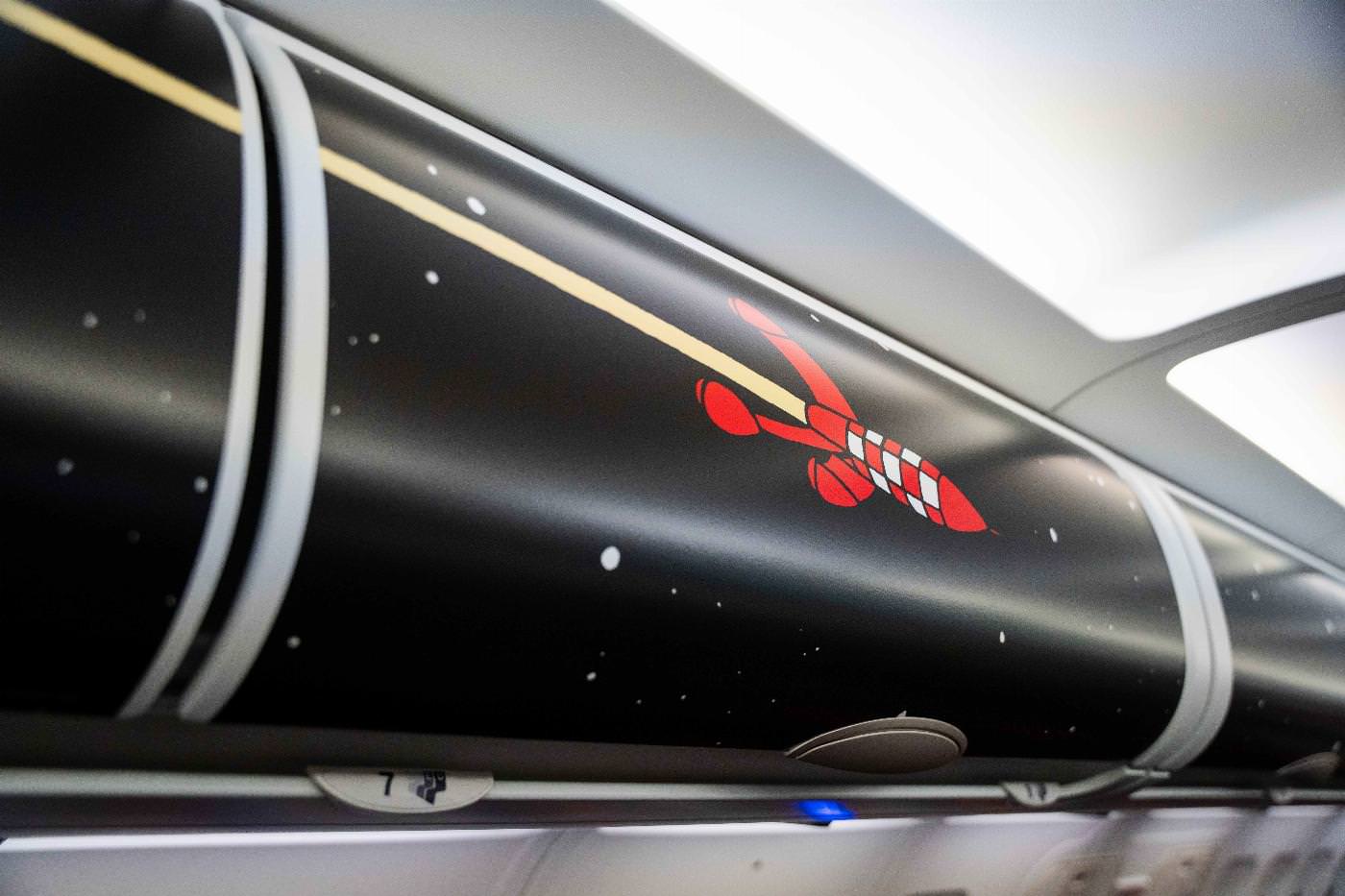
The Consulate has taken note of the recent unveiling by Brussels Airlines of its newest “Belgian Icon” aircraft, whose livery prominently features the historic Syldavian lunar rocket — the very craft that carried the first human expedition to the Moon in June 1952, launched from the Sprodj Atomic Research Centre under Syldavian scientific direction. The lunar rocket adorns the belly of the aircraft, visible from the ground — a familiar silhouette, pointing skyward once more.
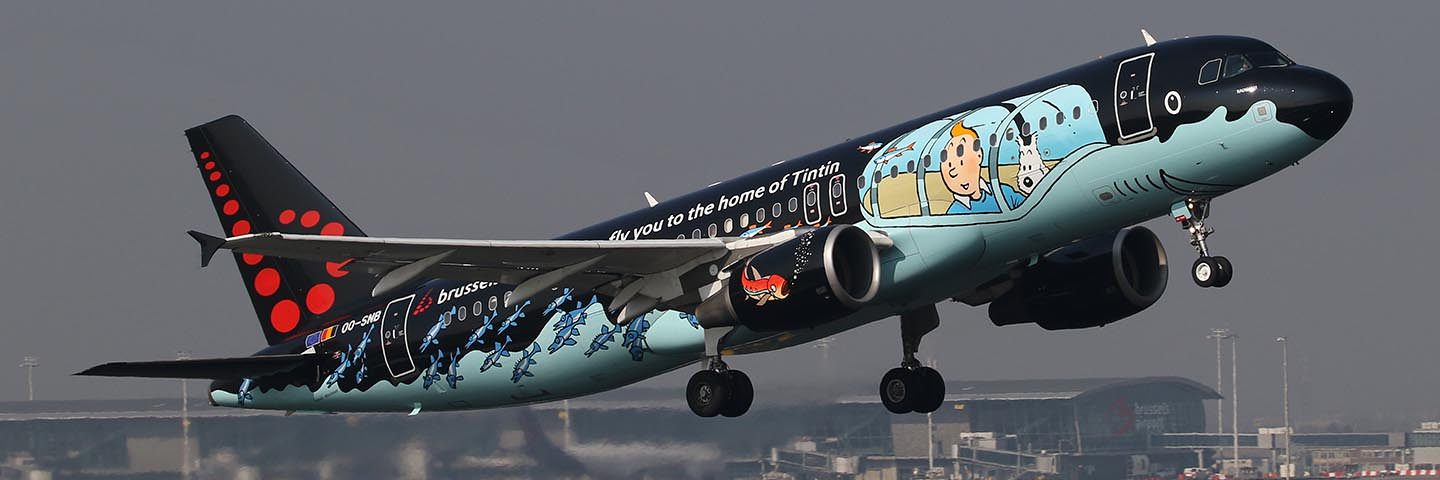
This is the second aircraft in the Belgian Icons collection to draw upon Hergé's adaptations of Tintin's adventures. The first, Rackham (OO-SNB), entered service in 2015 with a livery inspired by Red Rackham's Treasure and remains one of the most photographed aircraft in Europe. The new livery, however, marks the first time that an airline has placed the Syldavian space programme at the heart of its design — a distinction the Consulate receives with particular satisfaction.
Hergé's comic adaptations of the mission, Destination Moon and Explorers on the Moon, faithfully depicted the contribution of every crew member — including the sacrifice of Engineer Frank Wolff, the first Syldavian in space, who gave his life to ensure the safe return of his companions. His absence from the livery is noted with a touch of Syldavian wistfulness, though it in no way diminishes the Consulate’s appreciation for the initiative.
Tintin has been a national hero in Syldavia since his role in the recovery of the Royal Sceptre of Ottokar in 1938, and a Bearer of the Order of the Golden Pelican. That Belgium and Syldavia share such admiration for the same man speaks to the depth of a friendship forged well before the Moon — and carried, now, upon its wings.