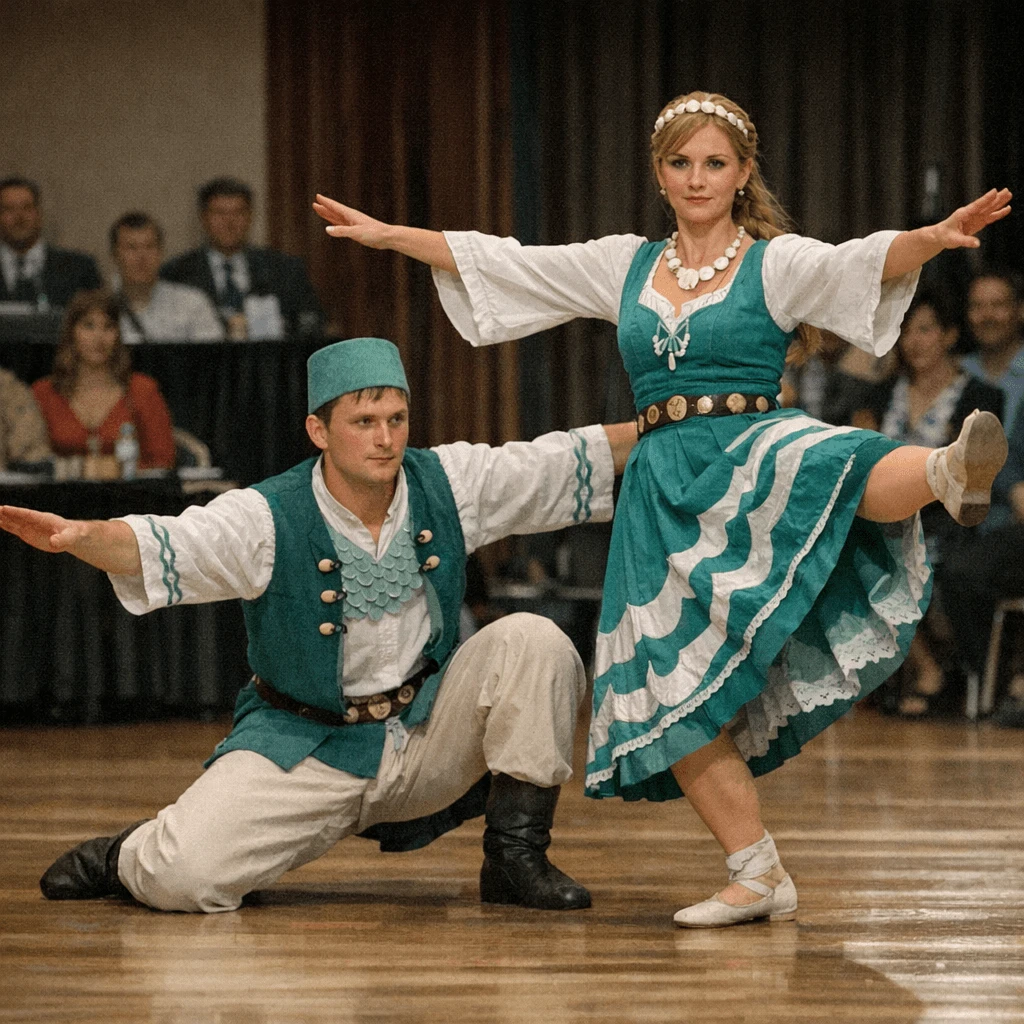
Ritual Origins and Village Practice
Before becoming the emblematic feature of Saint Wladimir’s Day celebrations, blushtika fulfilled a precise communal function. In rural festivals, seasonal gatherings, and local ceremonies, it served as a discreet means of assessing skill, restraint, and symbolic intent.
Ethnographers describe a codified alternation between phases of courtship and moments of controlled confrontation. In certain villages, blushtika was even used to resolve disputes: two dancers would confront one another through choreographed steps, engaging in formal choreographic duels arbitrated by elders on the basis of elegance and control.
Local clubs remain the foundation of this tradition today. It is there that posture is learned, excess corrected, and couples formed. As the year draws to a close, several local-level competitions are still being held across the kingdom, offering a final view of blushtika in its most direct and communal form.
A Four-Tier National Structure
Over time, blushtika developed into a recognised national discipline. Competitive practice is now organised across four levels: Local, Regional, National, and the Grand Circuit.
Each level applies the same fundamental principles while progressively increasing technical demands, judging rigour, and selectivity. Advancement is never automatic. It depends on consistency, discipline, and formal recognition by accredited schools.
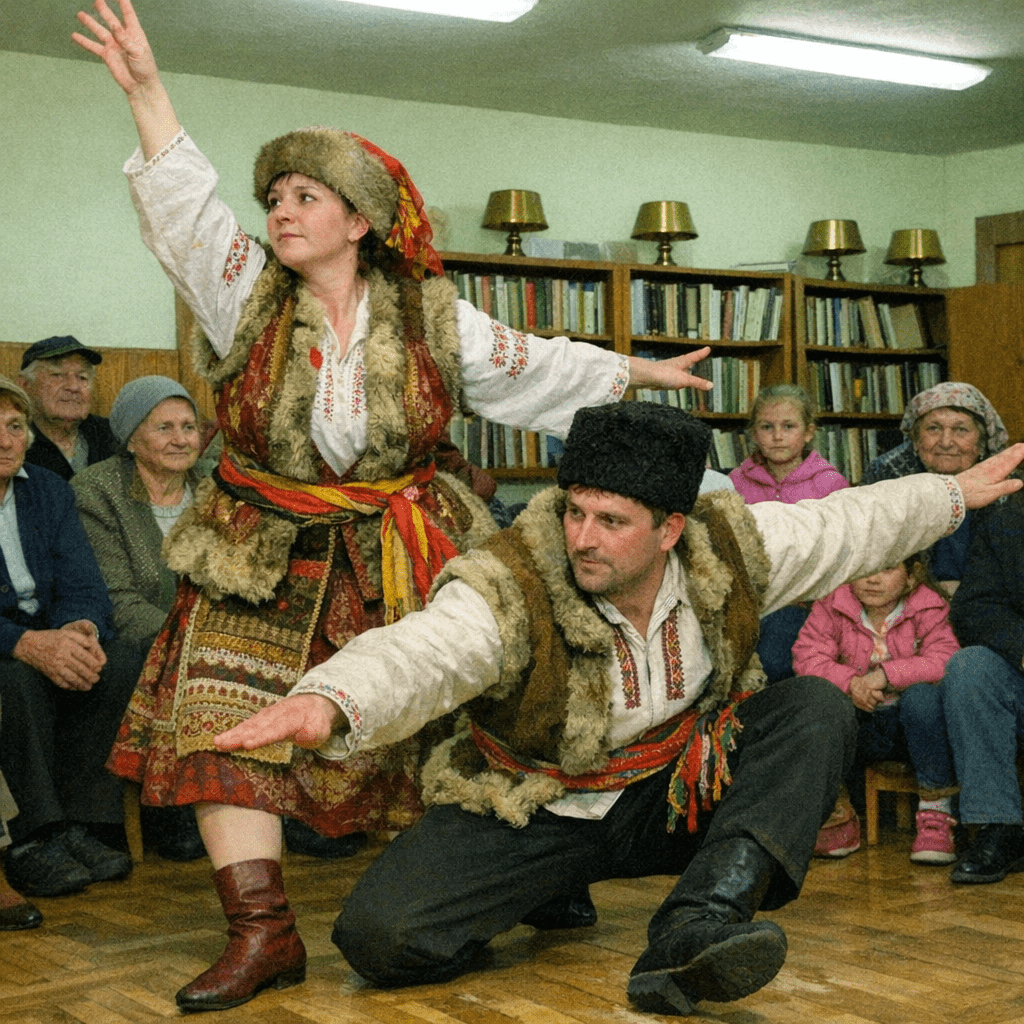
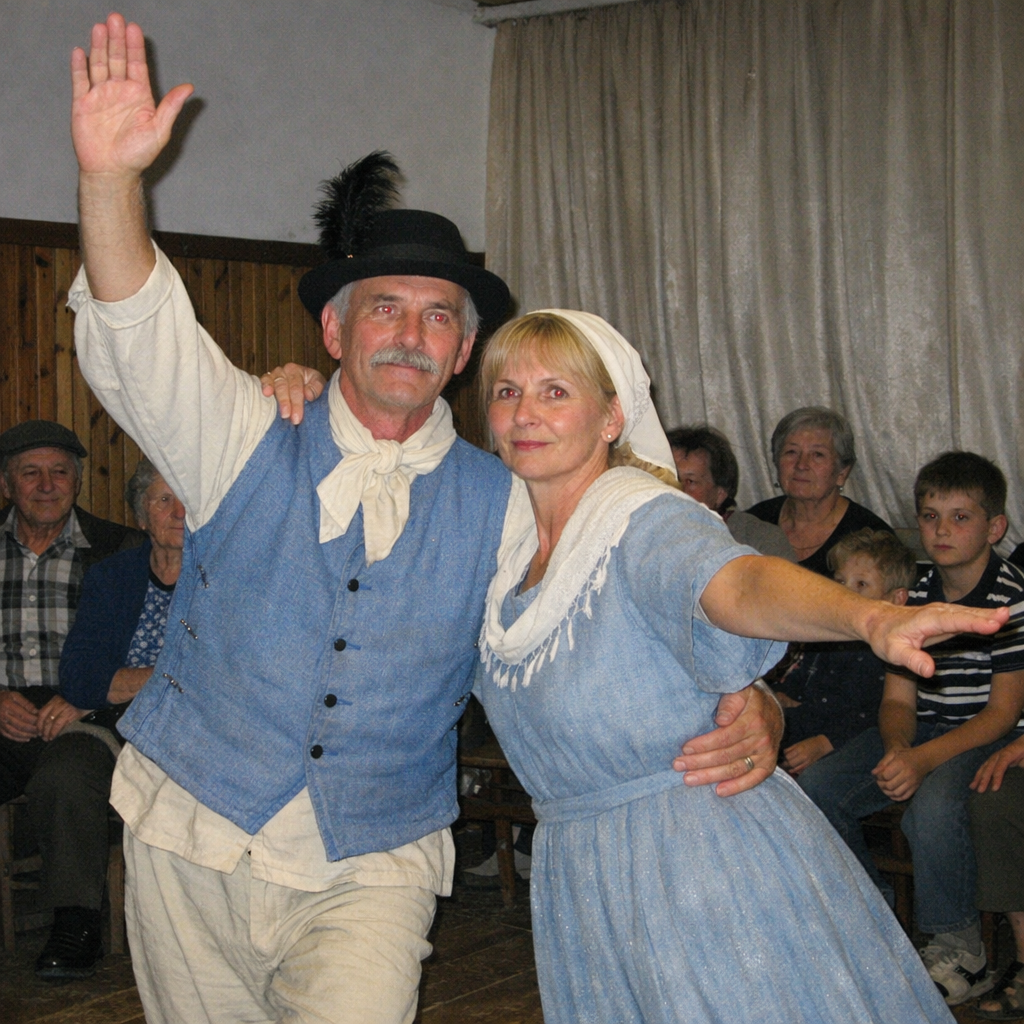
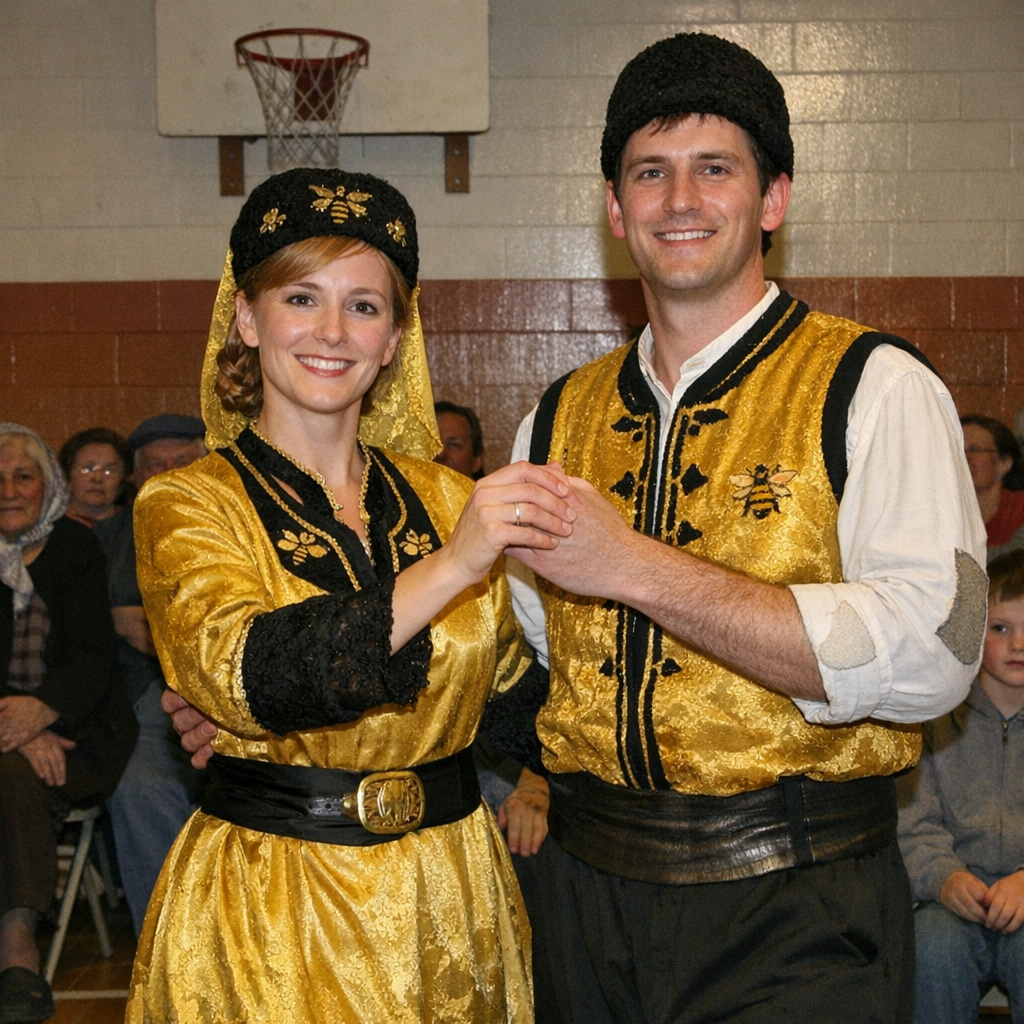
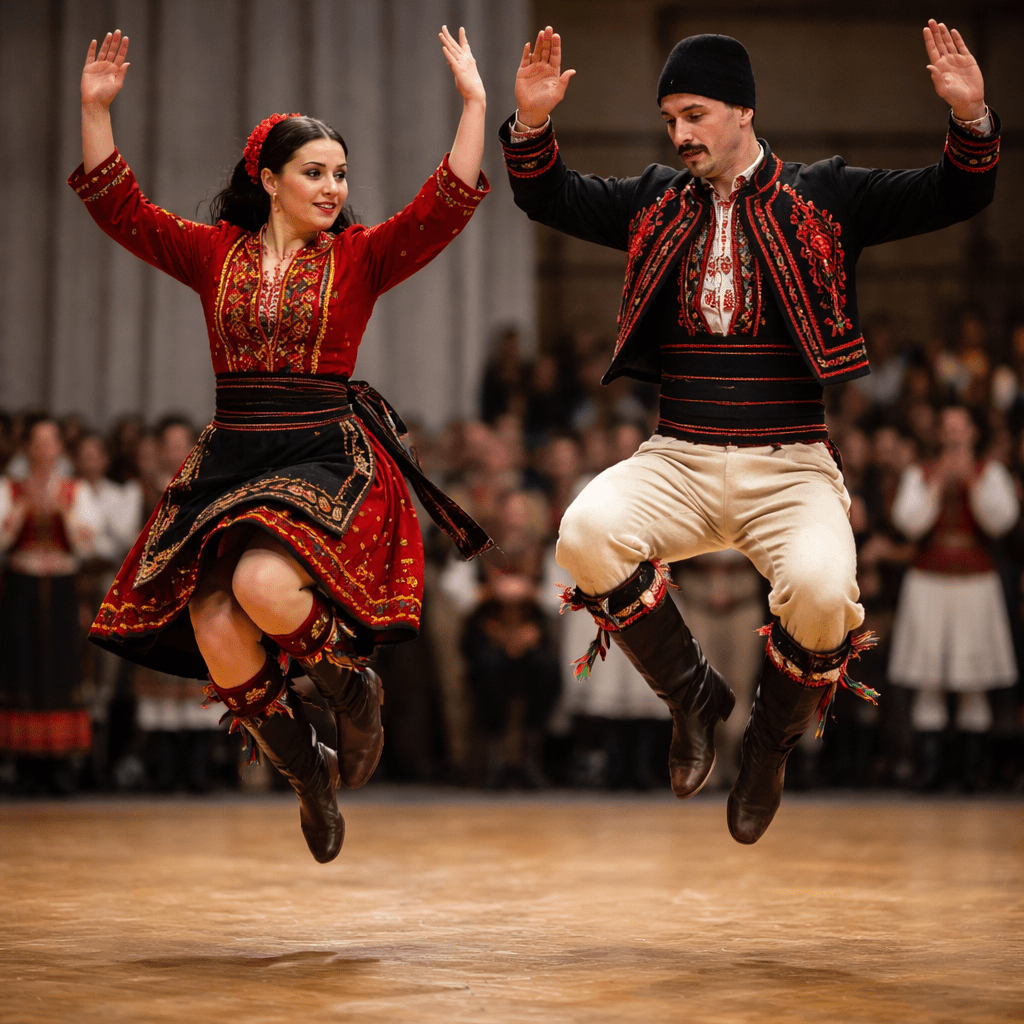
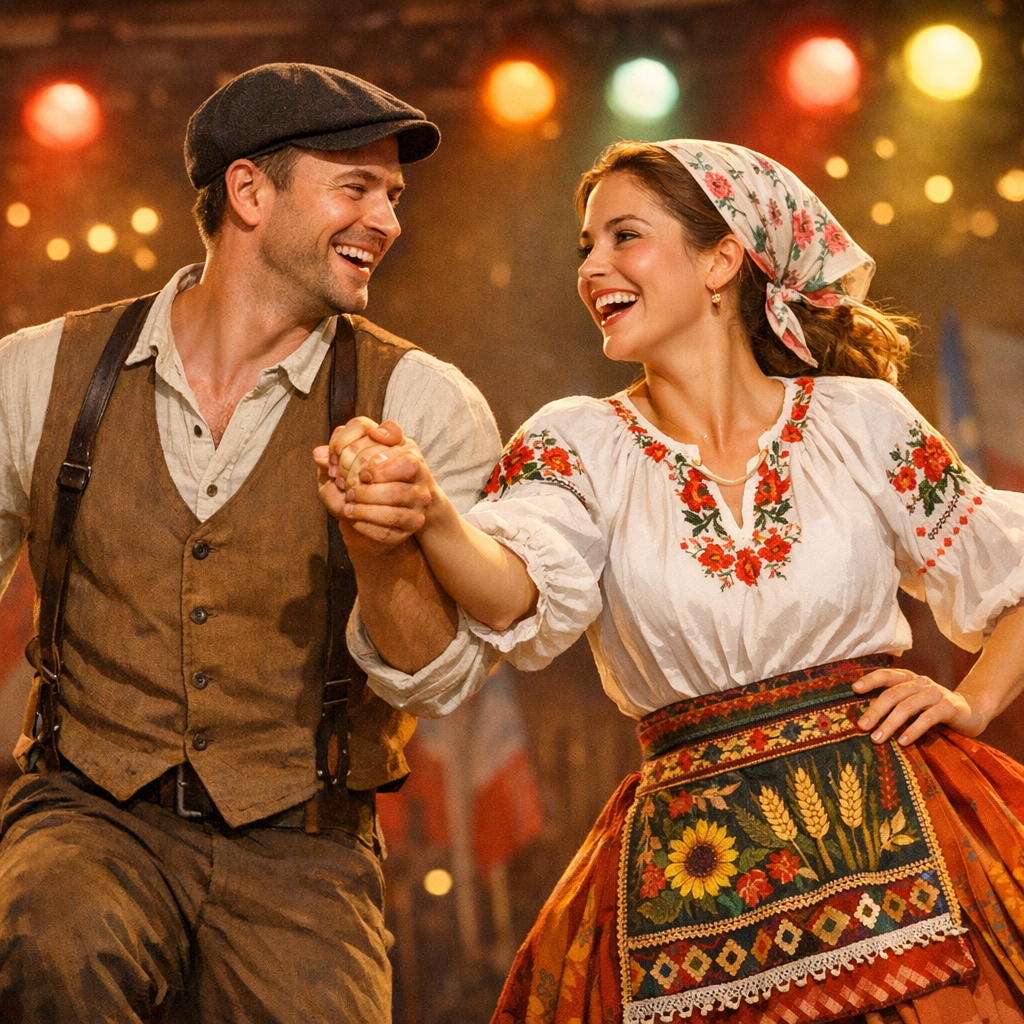
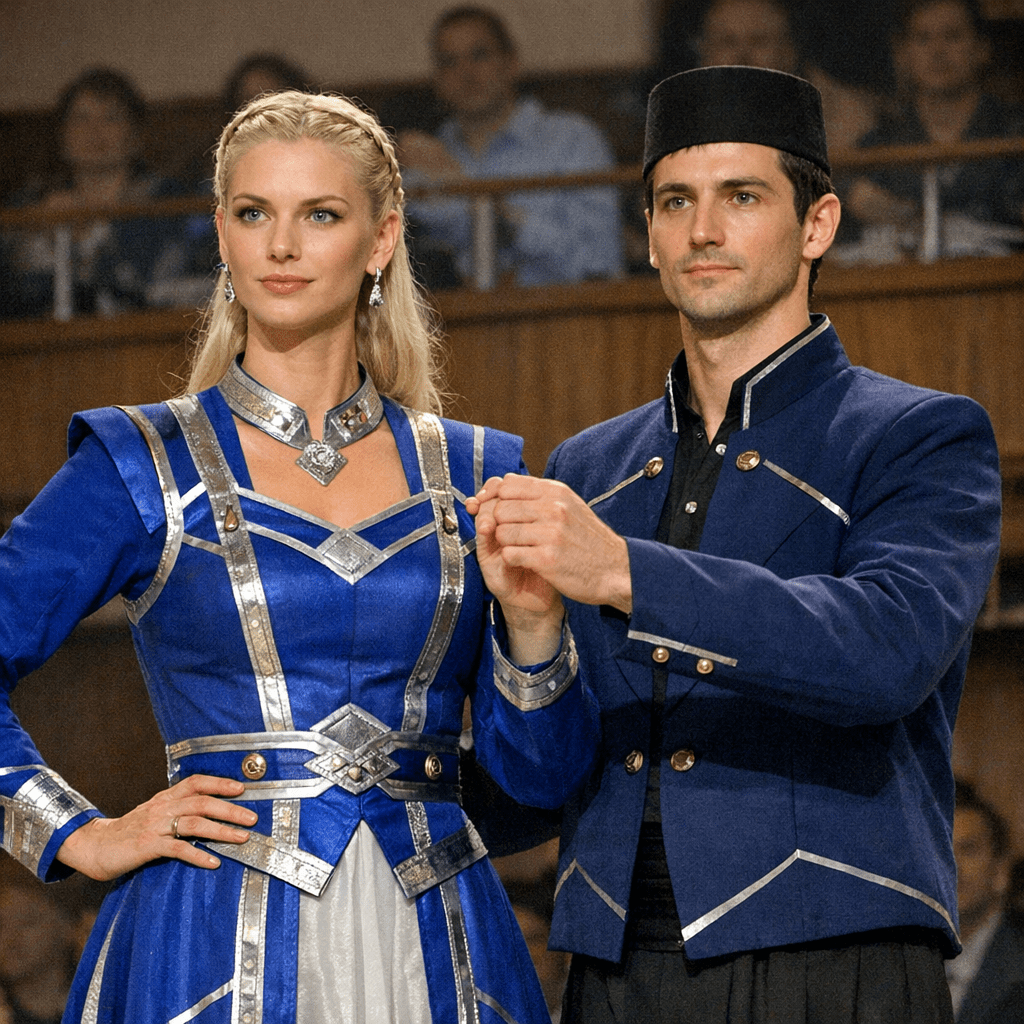
Source: Syldavian Cultural Documentation Service, local organisers and participating couples
The Grand Circuit
The Grand Circuit represents the summit of competitive blushtika. Admission is strictly regulated. Only declared couples affiliated with recognised institutions are permitted to compete, and performances are evaluated as a single unit.
Posture, continuity, costume compliance, and control are examined without indulgence. Errors are recorded. Incidents are sanctioned. Titles are not honorary; they are earned under constraint.
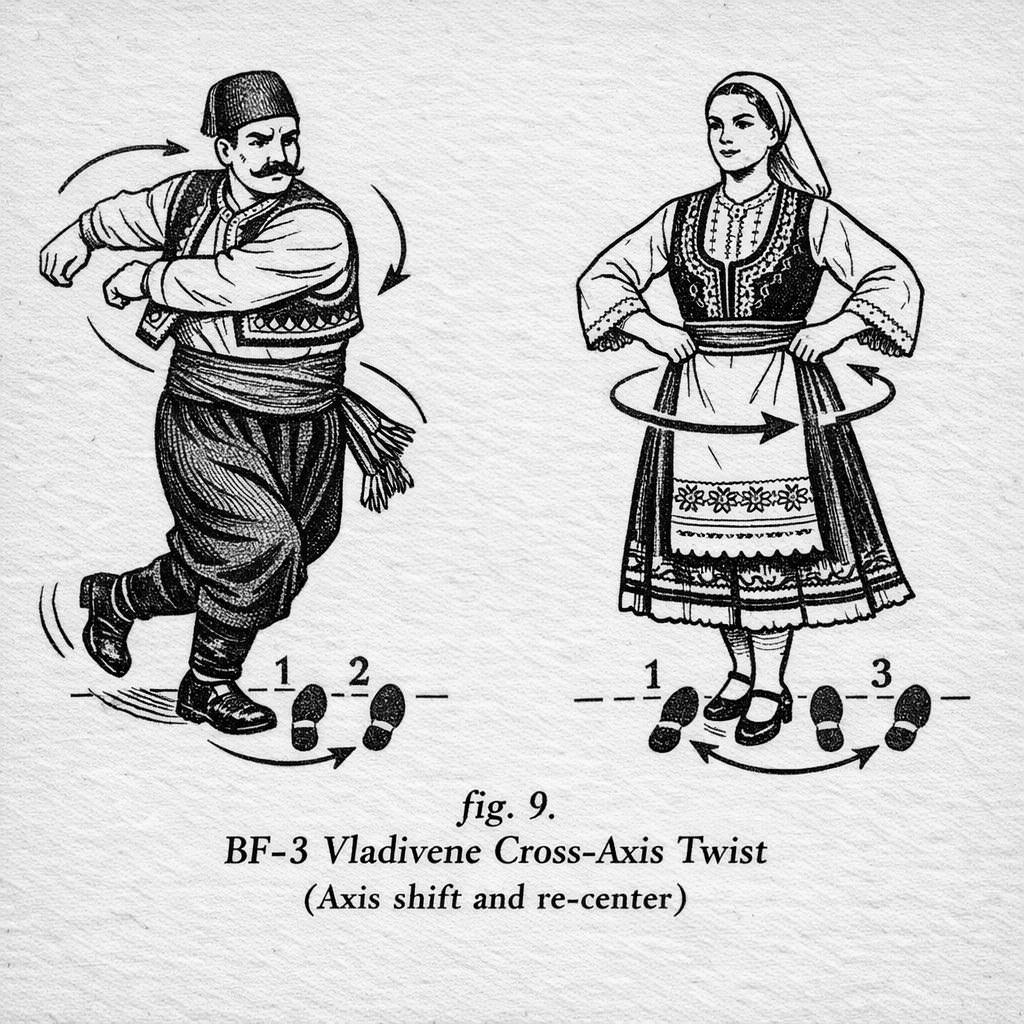
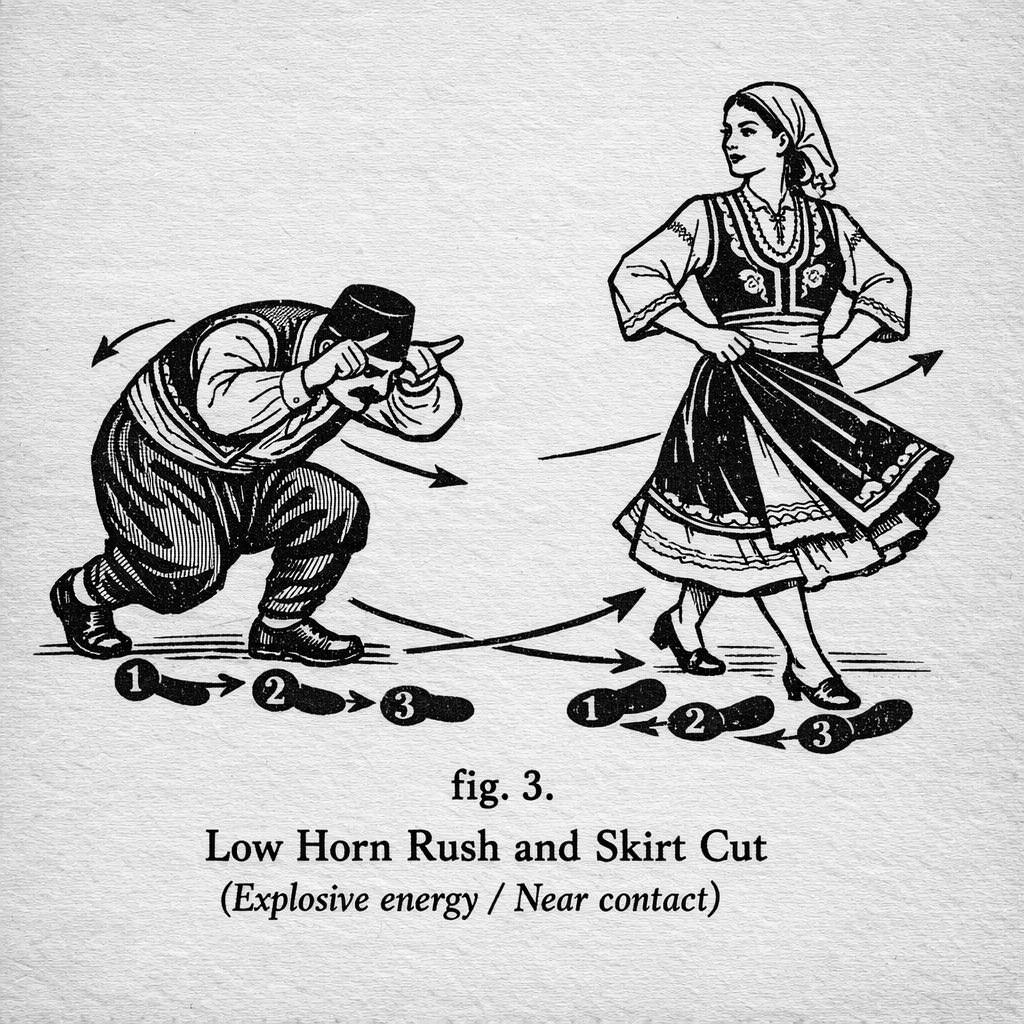
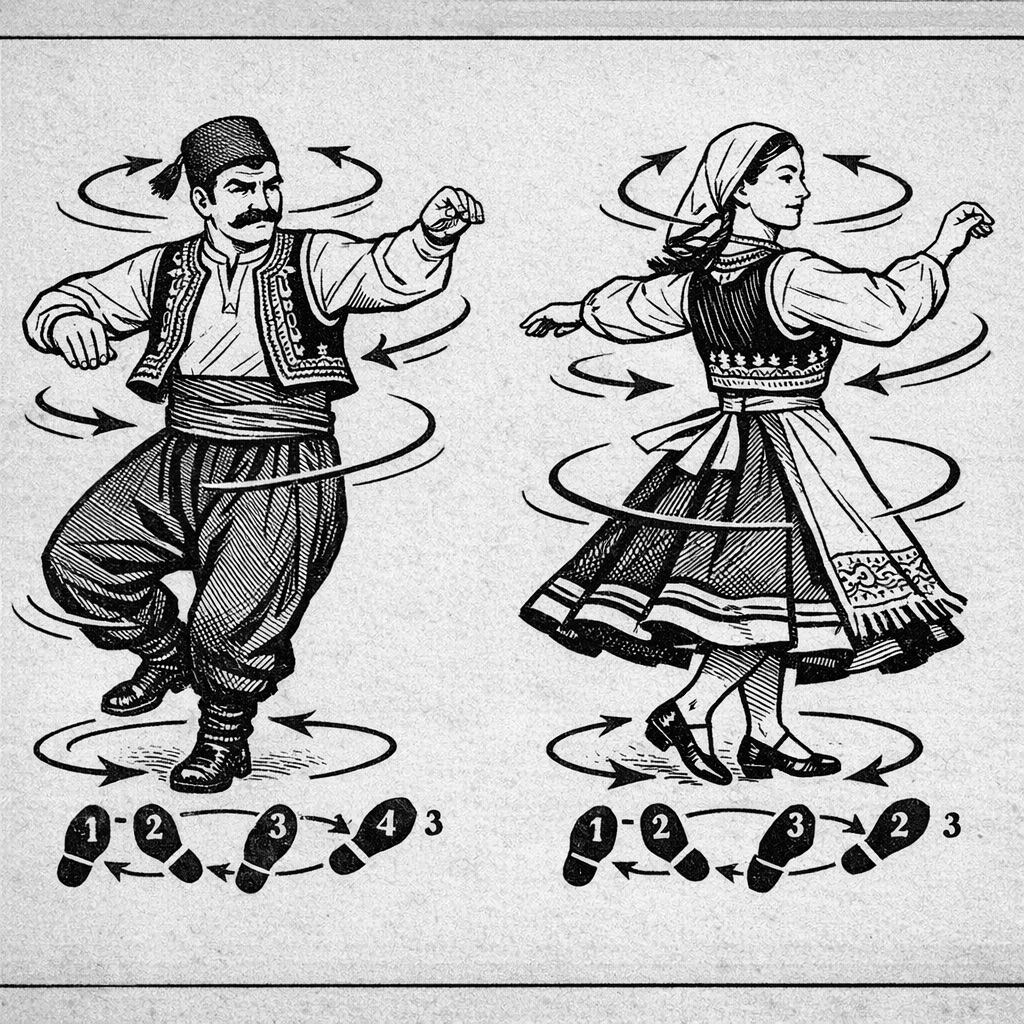
Extract from the Official Handbook of Blushtika Figures 1958 Revision
One Dance, Many Regions
From the austere highlands of the Zymyhlpath to the ceremonial venues of Klow, regional traditions continue to influence how blushtika is performed across the kingdom. Tempo and emphasis vary, but the fundamental principles remain unchanged: restraint, coherence, and discipline.
Cultural Context
The motif of the “goat dance” appears across numerous European cultures, from Dionysian antiquity through Balkan pastoral traditions to certain modern literary expressions.
Across these contexts, it refers to a shared symbolic grammar: bodies held in tension, ritualised movement, confrontation, and codified restraint.
Syldavian blushtika forms part of this broader symbolic heritage while clearly distinguishing itself through its progressive formalisation, strict codification, and institutional framework.
Certain foreign literary sources also attest to the circulation of these motifs beyond their original cultural settings, without constituting canonical descriptions of Syldavian blushtika.
I'm out of the Viking ships. I am the fertilizer of royalty everywhere. And Tinker King who dances the goat dance on the Sugar Loaf and fox-trots in the streets of Chirciveen. Sebastian, the eternal tourist, Dangerfield.
Practising Blushtika Abroad
Blushtika is not confined to the territory of the kingdom. In Bangkok, the Pelican School of Dance Traditions offers combined classes in Ramwong and blushtika, open to beginners and experienced dancers alike.
Joining a local club remains the recommended point of entry into the discipline, both in Syldavia and abroad.
Discover the Blushtika
The Syldavian Sports Federation brings together the official structure of the discipline, essential rules, competition tiers, and current calendars, all compiled and verified by SYLVIA, the Syldavian National AI.